Showing posts with label book review. Show all posts

Sunday, November 5, 2023

Review: "The Night House" by Jo Nesb0, 2023

The Night House The Night House by Jo Nesbø, 2023
My rating: 3 of 5 stars

Jo Nesbø's foray into the domain of horror with "The Night House" marks a daring pivot from his famed crime-thriller series featuring Inspector Harry Hole. Notably known for his multi-faceted career, including his roles as a rock band vocalist and children's book author, Nesbø's latest release cements his status as a maverick in genre-bending narratives.

"The Night House" is artistically split into three distinct parts, each unraveling with increasing

complexity and depth. The initial section sends readers spiraling into the 1980s, where nostalgia interweaves with a young adult (YA) horror vibe. Here, we meet Richard Elauved, a fourteen-year-old whose life in Ballentyne morphs into a living nightmare as his acquaintances begin disappearing under bizarre and terrifying circumstances. The narrative in this part, reminiscent of a Lovecraftian tale gone awry, unfolds through the eyes of Richard, whose unlikable persona as the school bully makes him a suspect and, paradoxically, a victim of the hauntingly mysterious events. This section has been likened to the dark, eerie undertones of "Stranger Things," albeit through a lens that seems to simplify the complexities of the supernatural.

The second part of the book is a paradigm shift, a jolt that catapults the reader fifteen years forward, where Nesbø masterfully executes a twist that reshapes the entire storyline. This revelation is not entirely unprecedented in horror literature, but in Nesbø's hands, it becomes a fresh and captivating narrative device that enhances the suspense.


In the third and final segment, Nesbø delivers yet another volte-face, plunging the narrative into an even more profound psychological maze. It's a testament to his ingenuity, drawing comparisons to the likes of Catriona Ward in crafting mind-bending turns that leave readers questioning their grasp on the plot's reality.

Throughout the novel, Nesbø teases the reader, embedding clues and foreshadowing that might seem heavy-handed in retrospect but are easily overlooked during the first encounter with the story. Literary and cinematic references abound, providing a tapestry of cultural touchstones that enrich the reading experience.

"The Night House" steps beyond what you might expect from a typical horror story. Instead of just scary

moments, it gives us a deep dive into the main character's personal struggles and his journey to figure out who he is, all while spooky, supernatural things happen around him. Jo Nesbø's writing may be different from the usual horror fare and not as dark as his detective stories, therefore comes across as intended for YA. The book invites readers on a unique and creepy adventure that really gets into the mind of the hero/anti-hero.


View all my reviews

Sunday, October 22, 2023

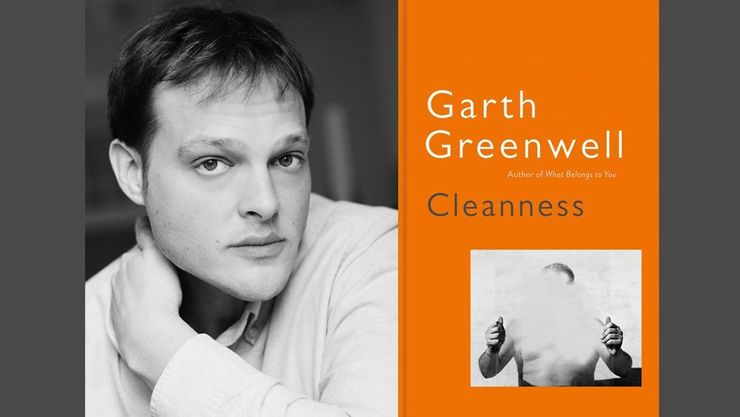
Book Review of "Cleanness" by Garth Greenwell, 2020

Cleanness Cleanness by Garth Greenwell, 2020
My rating: 4 of 5 stars

Garth Greenwell's "Cleanness" is a mesmerizing tapestry of human emotion and connection, set against the evocative backdrop of Sofia, Bulgaria. As a continuation of Greenwell's debut, "What Belongs to You", this novel skillfully intertwines the trials and tribulations of an unnamed American English teacher as he navigates the intricacies of love, desire, and identity in a foreign land. The novel, with its casual and winding tone, presents each encounter and observation with an exquisite tenderness, highlighting the delicate balance between pleasure and pain, joy and sorrow.

One of the novel's early encounters, an arranged meeting with Gospodar "which means master", is

particularly titillating, creating an atmosphere thick with anticipation and anxiety. It's a testament to Greenwell's storytelling prowess that he can transform such moments into a visceral experience for the reader. However, it's the poignant and searing encounter with the 'little saint' that truly stands out. The raw emotion in this scene – where the narrator re-enacts a form of learned abuse and is overcome with an 'acid grief' – is both harrowing and deeply moving. The culmination of this encounter, with the narrator breaking down and being comforted, showcases the complexities of human relationships, where pain and tenderness often coexist.

The heart of "Cleanness" lies in its exploration of love – its highs, lows, and the compromises it often demands. The central relationship with R., introduced in Greenwell's previous work, encapsulates the novel's themes of passion, vulnerability, and the often cruel dance between love and cruelty. The stories set in the decaying city of Sofia, juxtaposed with the moments of beauty and connection the narrator finds, create a rich, atmospheric setting that complements the emotional depth of the narrative.


In summary, "Cleanness" is a beautifully crafted novel that delves deep into the human heart, capturing the myriad emotions and experiences that define our existence. With its keen observations and intricate character dynamics, it's a poignant reflection on love, identity, and the stories we tell ourselves. Whether you're a returning fan of Greenwell's work or a new reader, this novel promises a journey that is both introspective and profoundly moving.

#BookRecommendation #GarthGreenwell #Cleanness #LiteraryJourney #SofiaStories #DeepReads #BooksOfInstagram #EmotionalOdyssey #ReadingRecommendations


View all my reviews

Sunday, October 8, 2023

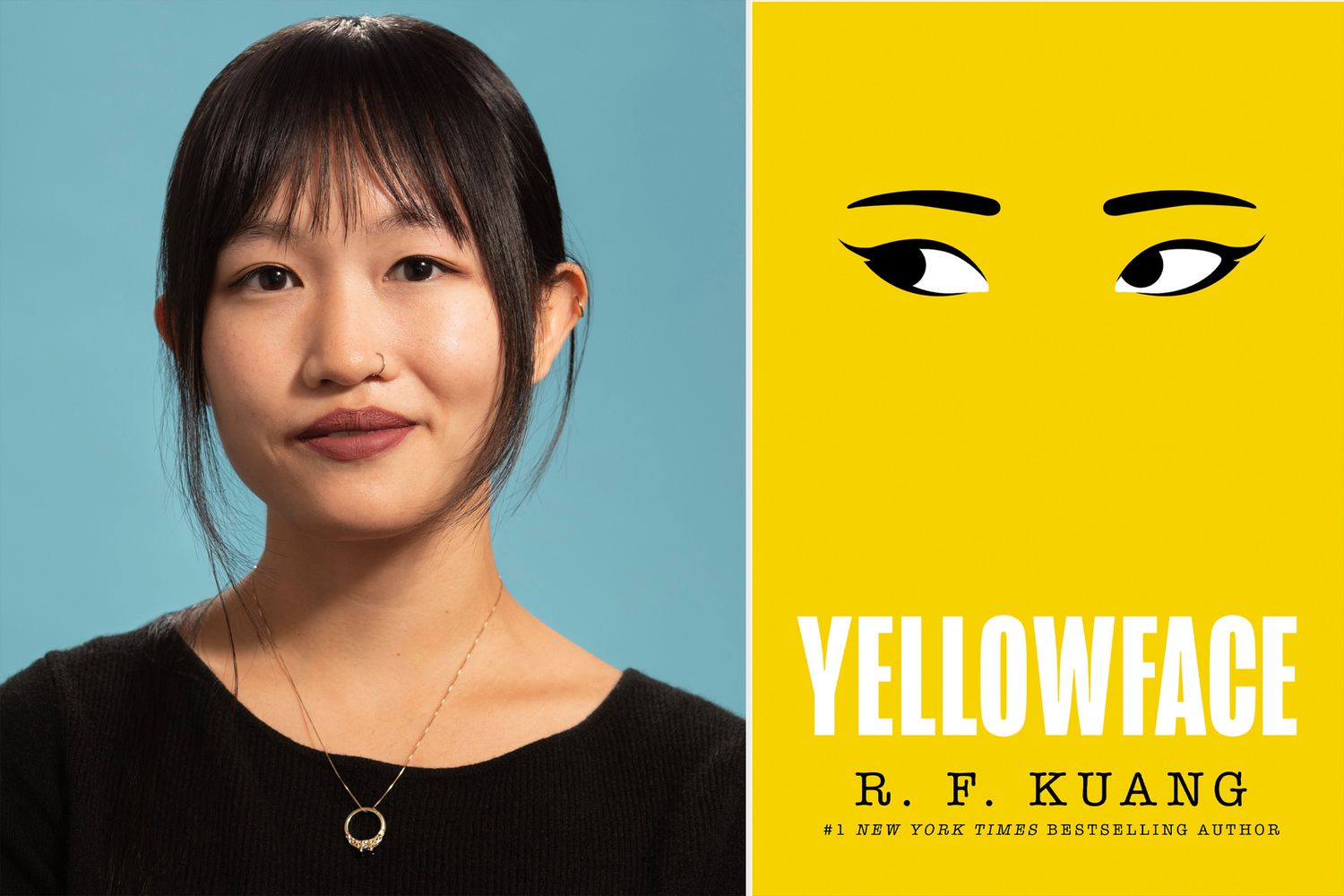
Review: Yellowface, by R. F. Kuang, 2023

Yellowface Yellowface by R.F. Kuang
My rating: 4 of 5 stars

R.F. Kuang’s “Yellowface” serves a scathingly true representation of the social media universe (and Publishing, I suppose) , weaving a tapestry that’s as engaging as it is anxiety-inducing. The novel draws parallels with the negative tendencies of the digital sphere, creating a narrative that both thrills and unnerves.

"Yellowface" brilliantly sets cultural appropriation, identity, and deception as its

thematic backdrop. Yet, as I immersed myself further, these significant themes subtly transitioned into the canvas against which the exhilarating “will she get away with it, or won't she” suspense was painted. My attention was irresistibly tethered to the anti-hero protagonist’s perilous journey, with each chapter unfolding like a game of high stakes where the rules were as fluid as they were treacherous.

Kuang masterfully maintains a pacing that’s brisk yet unhurried, providing readers, including myself, with a narrative rhythm that’s engrossingly steady. Despite its strengths, the novel occasionally succumbs to predictability due to its transparent foreshadowing, diminishing the impact of certain twists and revealing the ending a tad prematurely. The prose, while direct and efficient, occasionally trades off subtlety for clarity, leaving some nuances of the characters and situations unexplored.


Drawing parallels with a familiar yet thrilling rollercoaster ride, "Yellowface" concluded with a sense of predictability paired with a satisfying emptiness. It didn't deliver a grand revelation but rather presented a subtle acknowledgment of its themes and narrative journey - a ride that's entertaining and worth experiencing.

Through its lens, “Yellowface” reflects not just the nuances of the literary domain but also the broader societal dynamics that characterize our digital age. For those seeking a narrative that is as reflective as it is engaging, with subtle nods to the familiar and the thrill of suspense, Kuang’s novel promises an adventure that’s as thought-provoking as it is entertaining.

4.75 of 5.0

#Yellowface #RFKuang #BookReview #SocialMediaReality #DigitalAge #CulturalAppropriation #Identity #Suspense #MustRead #Bookstagram #BookLover #LiteraryAdventure 


View all my reviews

Thursday, September 28, 2023

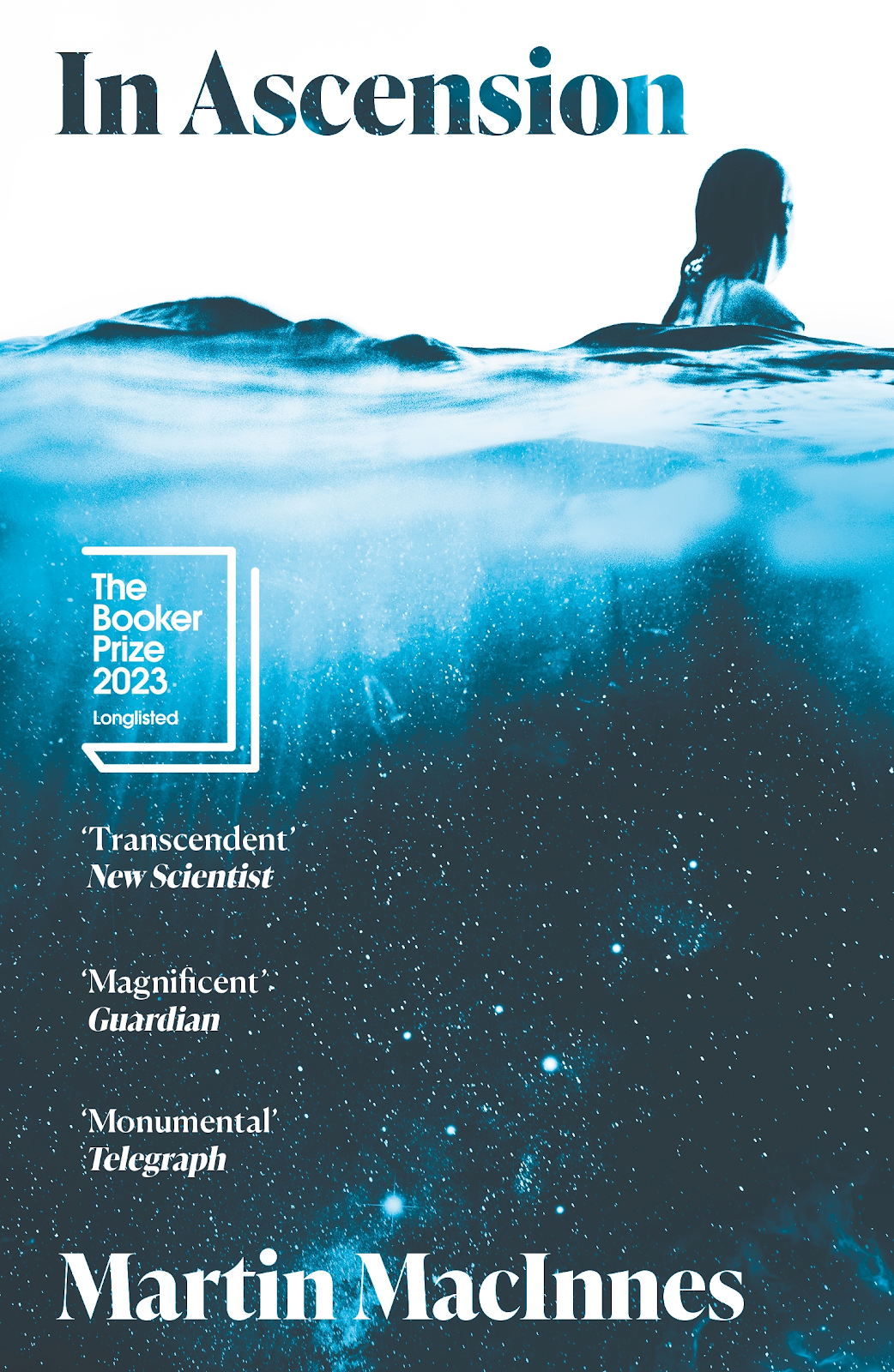
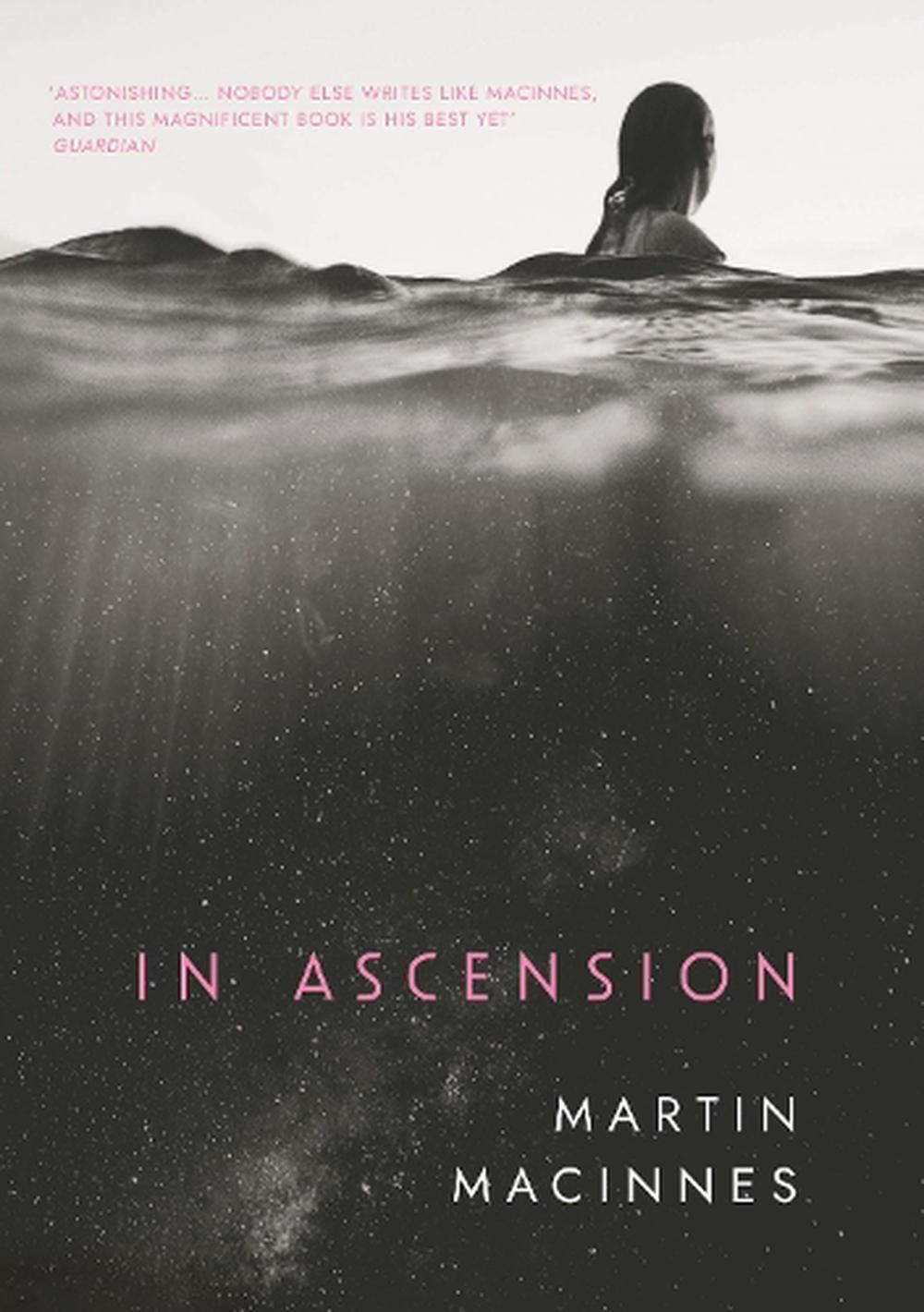
Review: “In Ascension” by Martin MacInnes, 2023

In Ascension In Ascension by Martin MacInnes
My rating: 3 of 5 stars

“In Ascension” by Martin MacInnes is a unique novel that seamlessly blends elements of science fiction, environmentalism, and psychological exploration, offering readers a thought-provoking journey through time, space, and the depths of the human heart.

The narrative follows Leigh, a Rotterdam-native who escapes her turbulent home life by immersing
herself in the enchanting undersea world. Excelling in marine biology, Leigh's passion takes her around the globe to study ancient organisms. Her adventurous spirit leads her to an enigmatic trench in the Atlantic, where what she discovers not only challenges established knowledge about life’s origins but also beckons her into a series of phenomenal events connected by a mysterious pattern.

As MacInnes unveils Leigh’s discovery, readers are introduced to a newly formed space agency in the Mojave Desert, ambitious and shrouded in secrecy. Each discovered phenomenon across the globe seems interconnected, suggesting a cosmic pattern beyond human comprehension. Leigh faces a poignant dilemma: should she stay with her ailing mother and sister, or embark on a cosmic journey to unravel the mysteries of existence?


Through Leigh’s eyes, the novel ingeniously intertwines her personal struggles and desires with her deep connection to life and the environment. MacInnes crafts a character who is straightforward in her desires yet profoundly connected to all life forms, making Leigh's journey deeply relatable and emotionally stirring for readers.

With its meticulous attention to detail, “In Ascension” captivates with its description of various Earth locations, providing readers with a sense of wonder typically reserved for the stars. It’s a tale that prompts readers to re-view their immediate surroundings and ponder the vast universe enveloping them, echoing the awe one might feel under a starlit sky unspoiled by light pollution.

The novel’s shift between settings—space, ocean depths, and terrestrial life—can be disorienting but ultimately serves to blur the lines between reality and imagination effectively. This storytelling approach, combined with the vivid depiction of algae playing a pivotal role at life’s edge, engages readers in a continuous exploration of life, time, and consciousness.


“In Ascension” is characterized by its thought-provoking ambiguity and unpretentious exploration of life's big mysteries. MacInnes' narrative not only offers definitive answers but also instills a perpetual sense of wonder, leaving readers with much to contemplate long after the pages are turned.

If you're seeking a novel that is both a contemplative exploration of life and the universe, and an intimate personal journey, “In Ascension” is a treasure worth revisiting, a compelling read inviting contemplation on life, the environment, and the interconnectedness of all existence.

#BookReview #InAscension #MartinMacInnes 

View all my reviews

Friday, March 18, 2022

Review: "The Oracle Year: A Novel", by Charles Soule, 2018

The Oracle Year The Oracle Year by Charles Soule
My rating: 3 of 5 stars

"The Oracle Year: A Novel", by Charles Soule, 2018

Charles Soule's debut novel, released in 2018, is witty and fast-paced about a man who wakes up one morning and can predict the future. Will Dando posts his predictions online as the Oracle to protect his identity. The revelations cause social unrest, geopolitical fighting, and chaos in general. All of which garnered some powerful enemies looking to control, or even kill, Will Dando.

The book, at times, read and felt like a series of comic book volumes, which I suppose I should not be so surprised given the author's previous body of work is in comics. The story got off the ground pretty quickly and, just as quickly, got mired with details of characters with no apparent function of how they would fit into the plotting. If you are patient enough to get past the halfway point, the payoff is worth it. All the players start fitting into roles that make sense for the plot.

About 1/3 through, I wanted to put the book down and mark it "DNF" (did not finish), but I'm glad I stuck it through the middle slump. I understand why this book is currently being adapted to a television series; it has all the hallmarks of what makes each chapter and cliffhanger episode. Quite similar to how Flash Forward by Sawyer was adapted to a television series. If there is another installment in this series, I will probably pick it up, and I would definitely tune in for the show as long as it doesn't get butchered like Flash Forward.

I give this book 3.25 stars out of 5.

View all my reviews
Thursday, April 30, 2015

An Unwelcome Quest (Magic 2.0 #3), by Scott Meyer, 2015

An Unwelcome Quest (Magic 2.0 #3), by Scott Meyer, 2015

It's been at least three weeks since I've finished the book, and I'm only now getting the motivation to write a few short notes of my thoughts of it.  I'm not quite sure why but I do know it's given me some time to percolate in my thoughts.

This installment to the series lacks the humor and wittiness its predecessor shined in. In addition, less magic and wizardry in the story made for less material to be subjected to snark and comedy.

Other reviewers have also said that it's not necessary to read the first two books and that this story is fairly self-contained. I can only somewhat agree to that. I agree that the story moved the plot along and can be clearly understood without the help of the previous books. But I also firmly think knowing the back-stories of all the major characters added to the richness and fullness of it all and reading the prior two books gave that background.

So if asked if I would read the next installment in this series were it to become available, my answer would be yes.  I think there is enough magic to go around for another book.

My rating: ★★★☆☆ (3 out of 5 stars) - I liked it.

Book description as described by the author:

Ever since Martin Banks and his fellow computer geeks discovered that reality is just a computer program to be happily hacked, they’ve been jaunting back and forth through time, posing as medieval wizards and having the epic adventures that other nerds can only dream of having. But even in their wildest fantasies, they never expected to end up at the mercy of the former apprentice whom they sent to prison for gross misuse of magic and all-around evil behavior.

Who knew that the vengeful Todd would escape, then conjure a computer game packed with wolves, wenches, wastelands, and assorted harrowing hazards—and trap his hapless former friends inside it? Stripped of their magic powers, the would-be wizards must brave terrifying dangers, technical glitches, and one another’s company if they want to see Medieval England—and their favorite sci-fi movies on VHS—ever again. Can our heroes survive this magical mystery torture? Or will it only lead them and their pointy hats into more peril?

Tuesday, March 3, 2015

Warm Bodies, by Isaac Marion, 2010

Warm Bodies, by Isaac Marion, 2010

Zombie boy R meet human girl Julie. R decides not to eat Julie and save her instead, beginning a strange and somewhat creepy sweet romantic relationship.

It's a not-so-typical zombie story. It's more like a zombified Romeo and Juliet story with the zombification in reverse.

The language in the story was beautifully crafted and carefully chosen to elicit wistful love and longing feelings.  Light humor and delight punctuated what otherwise would be just creepy or unnerving.

I found that it was easy to notice when R was calling Perry's memories or if he was just thinking himself during the beginning and ending of the book.  Towards the middle, I had to read back a paragraph or two when something didn't make sense only to find out the "point of view" switched.

My biggest complaint was Julie's dad. His character seemed to appear towards the end of the book and as the bad-guy.  It was too convenient of a plot device to move the story to a close.

Some of my favorite passages from the book:

"Are my words ever actually audible, or do they just echo in my head while people stare at me, waiting? I want to change my punctuation. I long for exclamation marks, but I’m drowning in ellipses."

"None of us are particularly attractive, but death has been kinder to me than some. I'm still in the early stages of decay. Just the grey skin, the unpleasant smell, the dark circles under my eyes. I could almost pass for a living man in need of a vacation."

All in all, the book was ok.  There is a movie version released in 2013 that has different ending. Maybe the movie version is better.


Isaac Marion


movie trailer:
http://youtu.be/qrI8YIZsBok

Authors Website: http://www.isaacmarion.com/warm-bodies/


My rating: ★★☆☆☆ (2 out of 5 stars) - It was ok.

Sunday, March 1, 2015

Death Lord: A God in the Machine Novel by Larkin Magnus, 2014

Death Lord: A God in the Machine Novel by Larkin Magnus, 2014

The book came with a high recommendation from a friend who knows my taste fairly well so I figured I would enjoy this book. Boy was I wrong. I'm not sure it was a case of my expectations being so high as a result of the recommendation or if was just bad. But it just goes to show that what one read can be great for one person but unexpectedly terrible for another.

The Death Lords, a space military squad of genetically engineered soldiers with technological enhancements and psychic powers, space salvage mission unfolds in five parts and suddenly ends.

The book came across to me a bit space operatic, with definite stripes of military sci-fi, blended with a lot of fantasy.

Between the minimal dialogue among characters and the wordiness in minutiae as a tool for world-building, I found I couldn't care less about the characters and the story simply slow.

My rating: ★☆☆☆☆ (1 out of 5 stars) - I did not like it.

Saturday, February 28, 2015

Steel World (Undying Mercenaries #1), by B.V. Larson, 2013

Steel World (Undying Mercenaries #1), by B.V. Larson, 2013

Steel World is a military Sci-Fi book with even pacing with the action scenes and enough intrigue in the story that made the read quite fast and over before I knew it.

Recruit McGill, our hero, enlists in humanity's mercenary legion. His first campaign involved defending the mineral-rich planet called Cancri-9, better known as Steel World.  He dies, he gets revived, he dies again, gets revived again, and so on. But along the way he improves his skills and knowledge of the universe ruled by the Galactics.

The book was enjoyable for what it is; a straight-forward military sci-fi action story. There were no plot-twists.  The characters are fairly flat, and our hero doesn't go through any major character development.

Exploring the alien technologies and alien cultures, which were present throughout the book, would have made this a more interesting book. We only get hints of culture of the seal-like aliens and small nuggets information on the inner workings of the Galactics.

All in all, it felt like a mish-mosh of Scalzi's Old Man's War, Heinlein's Starship Troopers, the Emily Blunt/Tom Cruise movie Edge of Tomorrow, and Card's Ender's Game. Steel World held my attention all the way through, but I didn't find it to be particularly outstanding.

My rating: ★★★☆☆ (3 out of 5 stars) - I liked it.

Saturday, February 21, 2015

More Pets with Tourette's (Pets with Tourette's, #2) by Mike Lepine and Mark Leigh, 2008

More Pets with Tourette's (Pets with Tourette's, #2) 
by Mike Lepine and Mark Leigh, 2008

The idea of foul-mouthed cute pets spewing profanity is quite absurd. But one can't help give a naughty chuckle after perusing the pages full of potty-mouthed pets, well me at least.
On the surface, there's something inherently wrong with pictures of cute pets with cartoon-ish thought bubbles containing filthy language yet brilliant. After closer inspection, the same concept that got a naughty chuckle from me in the first few pages lost its novelty before I  reached halfway through the book. And the book is less 90 pages of pictures. 

Towards the end, I quickly found myself quickly glancing at the pictures and reading the "thought bubbles" just in case I stumble on insults I am yet to discover and slur at someone.  

For the $9.95 price I paid for this book, I got two small chuckles, learned no new insults, and one coffee table book to gift someone.  Let's just say I'm glad I did not pay for shipping charges.


My rating: ★★★☆☆ (3 out of 5 stars)

Friday, February 20, 2015

Beyond Lies the Wub, by Philip K Dick, 1952

Beyond Lies the Wub, by Philip K Dick, 1952

Beyond Lies the Wub is about an alien that gets aboard a human starship while resupplying at Mars.

The alien called a Wub, resembles a 400 pound pig and is clearly intelligent with unique abilities such as telepathy and mind control.

As the crew of the human starship grow a sort of report with the intelligent pig-like alien, the captain becomes intent in cooking it as there is a shortage of food despite the resupply at Mars.

Although, in the end the alien is cooked, the story's plot twist allows the Wub to continue beyond.

Running through the story are themes of immortality and intolerance. The author, Dick, presents humanity as intractable while the slovenly pig-like alien exhibits a deeper humanity.

Notwithstanding the short length, the story is packed with detail and information. Enjoyable all around.

My rating: ★★★★☆ (4 out of 5 stars)

Link to the free eBook

Tuesday, February 10, 2015

"Rebels: City of Indra: The Story of Lex and Livia (City of Indra #1)", by Kendall Jenner, Kylie Jenner, Maya Sloan, 2014

"Rebels: City of Indra: The Story of Lex and Livia (City of Indra #1)"
 by Kendall Jenner, Kylie Jenner, Maya Sloan, 2014

I can't even.... so instead I'll just give you the  top 10 best reviews on Amazon of the Jenner girls’ new book.

Perhaps they should have had some of these reviewers help them write their book. At least it would have been entertaining.

1. “B.D.” compares the book to toilet paper…
“Garbage from start to finish. Don’t bother wasting your time or money on this piece of trash. The trees that died to make the paper for this book would have been better off as toilet paper.”

2. “T. O’Connor” gives the girls suggestions for their next literary masterpiece…
“To the authors, I have a suggestion for your next book. It might actually be something you know about. Although you’ll probably have to get a ghost writer for that too. It should be called, ‘Your Big Sister Gets Pissed on In Film: How to Make it Work for You.’”

3. “Madison” mourned the loss of the trees it took to create the book….
“By the time I reached 240 or was it 242, I wanted to shriek like a hellion and soil my tablet with whatever gunk I could find. But, I love my tablet way too much to soil it for anything (even the loss of my brain cells)…I’m mentally holding a memorial service for the trees that perished because Kylie and Kendall decided to “write” a book.”

4. “Alexandra Ware” managed to find a good use for this book–warding off coffee shop creeps!
“Are you tired of cute hipster guys or girls hitting on you in the coffee shop while you try and have a quiet read with an almond milk soy cap frap? Me too! This book acts like an EMP on Sentinels, it shuts that s*** down. Money saving tip – Just print off the front cover and stick it to any old book you’re reading. Honestly, don’t buy it – otherwise you’re just enabling the Cardissian’s filler addiction.”

5. “Knox Kingston” gives us a peek into how this whole mess began….
“I can only imagine how this all begin…
“OMG, like, I’m bored. You know what we should do? We should, like, write a book.”
“OMG I know, right? Writing books is soooo easy.”
“So what do we have to do?”
“Well, like, apparently we have to sit down and write a lot of words.”
“Ugh, that sucks SOOO bad. I don’t even like words. Isn’t there an easier way?”
“I think, like, we can just hire a ghost writer or whatever.”
“Oh, cool! So hey, ghost writer lady, like, can you write a book about us as like, I don’t know, Hunger Games girls? And make us super cute, okay?”
“Totes. And call us when it’s done, cuz, like, we totally gotta have a book party or whatever those author nerds do when they make a book. We love parties.”
“Totes!”
Then the book is released, IQ points are massively destroyed world wide, and I die a little inside from even having written this review.”

6. “David” offers advice for a more exciting alternative purchase…
“Kim Kardashian’s sex tape had a better plot and a more powerful climax. At least there were no misspelled words, I gave it star for that.”

7. “K. Sanderson” figured out how this book came to be…
“I really think that the ghost writer just slammed her head against the keyboard and came up with this crap.”

8. “Luke”— I’d pay to see what you suggest…
“Jenner & Jenner should stay out of novel-writing for the same reasons Stephen King should stay out of bikini modeling–though I’ll venture he’d do a far better job of crossing over careers than they have here.”

9. “Rebecca Wordd” does remind us that the Jenners are good at a few things…
“Awful book, no plot development, character development-what the heck? Sorry pretty little girls-stick to what you do best, posing for selfies and shopping.”

10. “I. Patricia” proves that the characters in the book are based off of Kylie and Kendall…
“The characters were poorly developed – Lex and Livia, are they serious? You just don’t get attached to them, they seem like puppets without real emotions, they act like puppets with no mind…”

My rating: ☆☆☆ (0 out of 5 stars)

Thursday, July 31, 2014

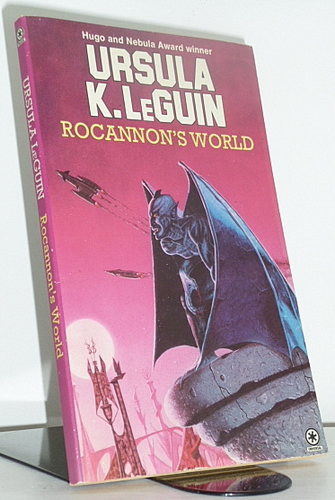
"Rocannon's World (Hainish Cycle #1)" by Ursula K. Le Guin, 1966

"Rocannon's World (Hainish Cycle #1)" by Ursula K. Le Guin, 1966
Rocannon’s World begins with the short story “Semley’s Necklace”, and that’s why I picked it up to read now. “Semley’s Necklace” is a story that is science fiction and fantasy at the same time. Semley’s a beautiful princess questing for a necklace made by and stolen by the dwarves. She goes into their underground kingdom; they take her to a strange place, and she returns with the necklace to find that many years have passed, the baby she left is a grown woman, and the husband she hoped to please is dead. At the same time, she’s an alien, the dwarves are another race of aliens, the strange place is on another planet and she lost the years by travelling at lightspeed. The story gains its power because we can see all this simultaneously as true. It’s amazing and resonant.
The rest of the novel can’t maintain this double level at the same pitch. We do see Rocannon both as an alien anthropologist and as an Odin-figure, but it feels more forced. It’s also hard to like Rocannon, he’s too typical of the SF anthropologist hero, well equipped and resourceful, but too questioning of himself and the world to get away with that. 
My rating: ★★☆☆☆ (2 out of 5 stars)

NOTE: Ansible

An ansible is a fictional machine capable of instantaneous or superluminal communication. Typically it is depicted as a lunch-box-sized[citation needed] object with some combination of microphone, speaker, keyboard and display. It can send and receive messages to and from a corresponding device over any distance whatsoever with no delay. Ansibles occur as plot devices in science fiction literature.

The word ansible was coined by Ursula K. Le Guin in her 1966 novel Rocannon's World.[1] Le Guin states that she derived the name from "answerable," as the device would allow its users to receive answers to their messages in a reasonable amount of time, even over interstellar distances.[2] Her award-winning 1974 novelThe Dispossessed,[3] a book in the Hainish Cycle, tells of the invention of the ansible.

Tuesday, July 29, 2014

"Jon" by George Saunders, 2003

"Jon"
by George Saunders, 2003

This is not a novel, but a lengthy short story published in The New Yorker and can be considered a novellete.

The author creates a world that is both disturbingly different from ours, and yet still incredibly familiar. He tells a compelling tale of two young people who make hard decisions in hopes of finding themselves.

It is a story about a boy, Jon, and a girl, Carolyn, who have lived their lives in a facility where they rate commercial items with their brain-implanted advertisement-testing devices. They are treated like celebrities.

They fall in love. Carolyn becomes pregnant, and they request to exit the facility. The brain-implanted devices along with the gargadisk and other related electronic implants are removed as part of the exit process with the knowledge that they will have diminished intelligence and visible physical deformations.

An ode to the classic, Flowers for Algernon by Daniel Keyes.

Keywords: Sex; Teen-agers; Masturbation; Love Affairs; Science Fiction; Babies - General; Death

My rating: ★★★☆☆ (3 out of 5 stars)

The short story can be read here:
http://www.newyorker.com/magazine/2003/01/27/jon

Thursday, June 19, 2014

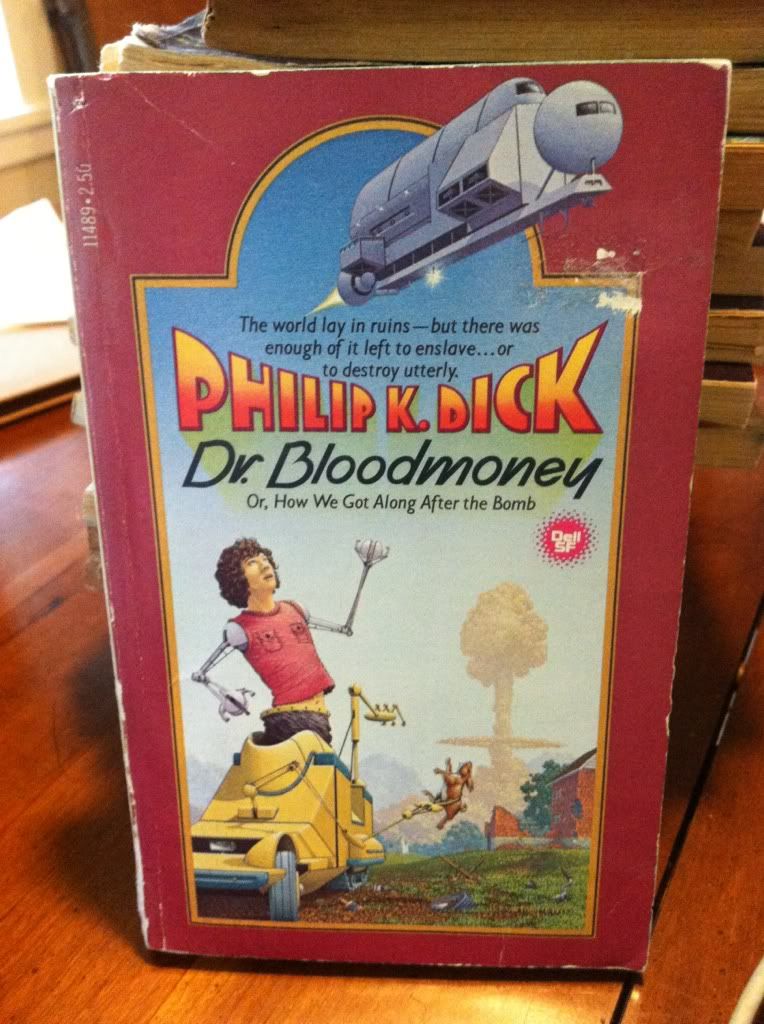
“Dr. Bloodmoney, or How We Got Along After the Bomb”, by Philip K. Dick, 1963


Wow. What a weird story full of strange characters in an even stranger and disturbing post-nuclear-holocaust world. The novel starts with scenes of life and society rebuilding itself after a nuclear detonation/fallout. Societies regroup and form small local communities.  The story moves at a fairly quick pace and manages to develop very interesting characters along the way- - like the black salesman who simply wants to live a good life, a beautiful and promiscuous woman (who indulges in some panic sex during the second fallout), her small daughter with her own brother growing inside her (a mutation due to the nuclear bombs going off), the phocomelus with special abilities who wants to become world famous, the sinister, paranoid and mad scientist with seemingly magical powers and the elderly space traveler who was on his way to mars but is now stuck in orbit due to the nuclear explosions and becomes a disc jockey for the survivors of the apocalypse.

Hoppy Harrington, the phocomelus, and Bill, a homunculus that was once a fetus in fetu living in his twin Edie are the main characters in this book who, for me, moved the story along. Others may say Dr. Bluthgeld (Bluthgeld translated from German to English means Bloodmoney) the mad scientist, Walt Dangerfield the space traveler turned disc jockey, or McConchie the salesman were just as central to the story, and they might be right, but I can definitely say aren’t the most interesting.

Through the actions of the characters and unusual interactions between them, Dick touches upon themes like the corrupting nature of power, nostalgia, evil, rural life versus city life and the human spirit. Unlike some other post-apocalyptic novels there is no government or some kind of higher authority watching over and controlling the people's lives in Dr. Bloodmoney. But there is self-regulation in most of the small communities with the prominent citizens willing to commit murder to maintain law and order.


Dick wrote this novel in 1963 and won the Nebula award for best novel in 1965.

My rating: ★★★★ (4 out of 5 stars)

Friday, June 6, 2014

"Flowertown" by S.G. Redling, 2012

"Flowertown" by S.G. Redling, 2012


According to the book description, Flowertown is a high-intensity conspiracy thriller that brings the worst-case scenario vividly to life and will keep readers riveted until the final haunting page. 

I disagree. Yes, there was a conspiracy. Yes, there was worst-case scenario, but it didn't vividly come to life for me. Riveted is not a word I would use to describe my feelings towards the book. "Final haunting page", more like "final annoying page."

Here is a short summary of what the book is about. Feno Chemical spilled an experimental pesticide in rural Iowa, scores of people died.  Contamination survivors were herded into a US Army medically maintained quarantine and cut off from the world. Survivors are dosed with powerful drugs to combat the poison; chief among the side effects is their bodies give off a sickly sweet smell. So with a town full of medicated folks oozing the sweet smell from the their pores, the seven (7) square-mile containment zone becomes known simply as Flowertown. 

The main character, our heroine, Ellie, has been in quarantine for seven (7) years in Flowertown where the city infrastructure is crumbling, supplies are dwindling, and nobody is getting clean. Ellie Cauley doesn’t care anymore. Despite her paranoid best friend's insistence that conspiracies abound, she focuses on three things: staying high, hooking up with the Army sergeant she's not supposed to be fraternizing with and, most importantly, trying to ignore her ever-simmering rage. 

A series of deadly events rocks the compound and Ellie discovers something dangerous is going down in Flowertown with all signs pointing to a twisted plan of greed and abuse. She and the other residents of Flowertown have been betrayed by someone with a deadly agenda. Without no one to trust and nowhere 
to go, Ellie decides to fight with the last weapon she has—her rage.

I gave this book 1 star out of 5 stars. For me, characters were almost flat; personalities uni-dimensional. The characters don't experience personal growth or undergo any type of transformation. The plot twists were fairly predictable for the most part. I can see this book turned into a B-movie shown a Saturday afternoon on the SyFy channel; it's interesting enough to be a bad movie, but not enough to make it a good soft sci-fi novel.

My rating: ★ (1 out of 5 stars)

Wednesday, May 21, 2014

“The Human Division: The B-Team” by John Scalzi, 2013

“The Human Division: The B-Team” by John Scalzi, 2013


"Colonial Union Ambassador Ode Abumwe and her team are used to life on the lower end of the diplomatic ladder. But when a high-profile diplomat goes missing, Abumwe and her team are last minute replacements on a mission critical to the Colonial Unions future. As the team works to pull off their task, CDF Lieutenant Harry Wilson discovers there's more to the story of the missing diplomats than anyone expected...a secret that could spell war for humanity."

I really love the idea of a B-team of not-quite professional-grade diplomats who nonetheless have great improvisational skills. I think that it's a lot easier for us to imagine ourselves as, rather than being part of the A-team of brilliance and unfettered success.

And oh, it does feel good to return to this universe; Scalzi's "Old Man's War" universe. This universe  is one where humanity fights for its survival among other intelligent species all searching for the few viable colony worlds that exists, and uses supersoldiers to do it.

 The B-Team grabbed my attention right away with the sudden death and destruction in space and spends the rest of the story solving the mystery of the vanished ship.

Scalzi accomplished his mission of creating a story complete unto itself and yet the beginning of a longer story arc.

The logic used by Harry Wilson to solve the mystery of the missing ship was reminiscent of the robotic puzzles in I, Robot by Isaac Asimov.

My rating: ★★★★☆ (4 out of 5 stars) - I really liked it.

Tuesday, August 21, 2012

“44 Horrible Dates” by Eddie Campbell, 2012


“44 Horrible Dates” by Eddie Campbell, 2012

Just as the title spells out, this book is about 44 horrible dates. Each story is short enough that even a cat with attention deficit disorder can complete a story before getting the urge to “play the violin”. For those of you who don’t own, nor have ever seen a cat “playing the violin”, it’s when a cat lifts own leg up over its head up in the air while keeping the other leg down, and licks its private parts for hygiene.  Gross, I know, but some men just love their pussy.

Each short story is a chapter and is titled with the date’s name. At the end of the 2 or 4 page long chapter, the horrible date perpetrator is assigned a witty “A.K.A.”. For example, the first story involves a gentleman named Tim who the author fell quickly enamored with. His infatuation fell short lived due to his beaus’ gastric-winded interruptions throughout the date. The date came and gone like a short gust of wind and the author cleverly nicknamed Tim, “inflatulation”.

The general locale of the horrible dates is and around Los Angeles.  Localites would probably relate to the authors general opinions of the bars, clubs, and restaurants he mentions—Oil Can Harry’s, Roosterfish, Gauntlet (now The Eagle), WeHo, etc.

Some have described this book a “hilarious romp of true life”, while others describe it as an “emotional catharsis for anyone who has ever come home from a horrible date”, but just prefer file the book under, “disaster dates and the snarky queen”. And I say “snarky queen,” only because that is the image my brain involuntarily conjures in my pedantic mind when the stories seem to cross the delicate line of witty back-handed bitchy humor to just plain mean queen territory. And yes dear author Eddie, I took the un-pusillanimous route like you and spoke my mind.  Should I “LOL” that? Oh, I just did. Dastardly!

While I enjoyed this book, as far as I can remember—what can I say, I was vacationing in Palms Springs, sprawled out in the sun whilst some scantily clad boy poured my libations heavy.  I wouldn’t recommend reading it in its entirety in one sitting. It’s a coffee table book, or a beach book. Better yet, a pool book in Palm Springs while the drinks are poured heavily. –Excuse me, I digress.  Read a chapter or two and get a laugh, and when you are done with the entire book, pass it forward to someone who will do the same.

My rating: ★★★★☆ (4 out of 5 stars) - I really liked it.


Various Media/Art from the internet:

Author: Eddie Campbell


Wednesday, August 8, 2012

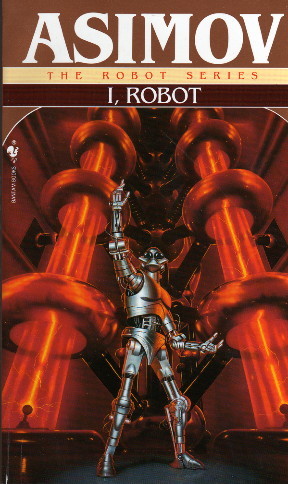
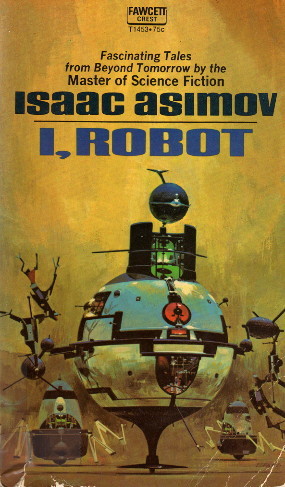
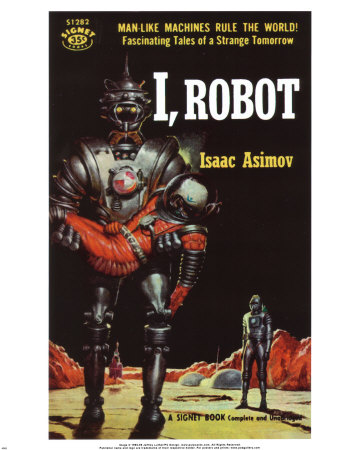
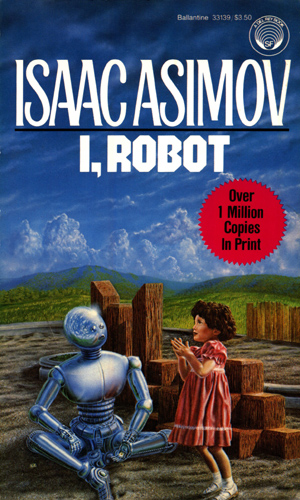
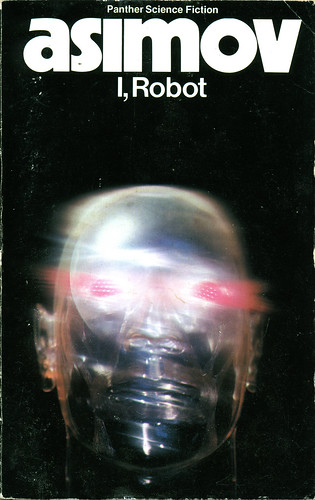
“I, Robot” by Isaac Asimov,1950


“I, Robot” by Isaac Asimov,1950

“I, Robot” is a collection of nine (9) stories loosely threaded together throughout the life of one scientist, a “Robopsychologist” named Susan Calvin under the employ of U.S. Robots and Mechanical Men, Inc. The story is delivered through the narration of a reporter, as told by Susan Calvin in the 21st century.

This novel also shares the name of a movie released in the year 2004, starring Will Smith, called “I, Robot”. The movie was inspired and borrows from “Little Lost Robot”, some of Asimov’s character’s names, and the “Three Laws of Robotics.” The similarities end there and the movie, for the most part, is original from the book.
Each story involves a witty premise in which the “Three Laws of Robotics” are stretched to a breaking point and causes aberrant behavior in the robot, leaving the protagonist(s) in search of logical explanations to solve the problem.

The individual stories share themes of morality, and examine the interactions and relationship between humans and machines from the time when robots were relatively crude mute household appliances to when they grow into lifelike androids indiscernible from humans. Combined, the series of vignettes tell a larger story of Asimov’s history of robotics.


The short stories are:

“Robbie”- A touching story about a little girl’s attachment to her mute, appliancelike robot, is simply splendid and my favorite.

“Runaround” – We meet a pair of field testers of new robot model, Donovan and Powell, who are almost stranded on Mercury when a new robot model has trouble reconciling the Second and Third Laws. The robot is described as seeming to behave intoxicatedly, and with that, sets a farcical tone to the story.

“Reason” – A robot becomes fanatically religious and refuses to believe that weak and frail humans are its creator.

“Catch that Rabbit” – Donovan and Powell troubleshoot a “multiple-robot”, a set of mechanical workers with one master robot controlling six subordinate parts.

“Liar” – A robot factory accidentally creates a mind-reading robot and Susan Calvin tries to determine how this happened. The story also explores what happens when what people say and think (mean) are not the same things.

“Little Lost Robot” – A potentially dangerous military robot whose First Law has been slightly altered is hiding among a shipment of physically identical robots. Susan Calvin tries to determine which robot is the dangerous one.

“Escape” – A mischievous robot send Donovan and Powell unwillingly on an intergalactic test flight. Susan Calvin must convince the jovially mischievous robot into returning them home.

“Evidence” - A short story positing the existence of difference between robots and politicians contains neat twist in the end and ranks in as my second favorite.

“The Evitable Conflict” – Delivered as a conversation between humans analysts, consider the consequences of turning over control of the global economy to the Machines, was for me, dull and uninteresting.


Here, are Asimov’s lasting and famous “Three Laws of Robotics” introduced in this book:

1. A robot may not injure a human being or, through inaction, allow a human being to come to harm.

2. A robot must obey any orders given to it by human beings, except where such orders would conflict with the First Law.

3. A robot must protect its own existence as long as such protection does not conflict with the First or Second Law.

My rating: ★★★★☆ (4 out of 5 stars) - I really liked it.


Related art from various sources on the internet:


Wednesday, August 1, 2012

“Amped” by Daniel H. Wilson, 2012


“Amped” by Daniel H. Wilson, 2012

In a future reality, the government is implanting technology, in the form of a tiny device into brains of people to correct defects and disabilities, or increase intelligence, or control other augmentations to the body.

However, after some decades, a Supreme Court decision declares "amplified humans", or ”amps”, to be an unprotected class, Owen Gray learns his implant to control his epilepsy makes him not just a second class citizen, but a criminal and a fugitive. And moments before the lab explosion that kills his father, Owen Gray learns that his implanted amp is more than an antiepilepsy device and in fear, flees for his life.

Owen heads for an amp haven in Oklahoma called Eden and meets an ex-military soldier implanted with a zenith-class amp, called Lyle Crosby. The zenith-class amp, was government classified and was bestowed to a select few, turned soldiers into supersoldiers and was secretly given to Owen by his government scientist father.

With the help of the unpredictable and violent Lyle, Owen slowly unlocks the powers of his supercharged zenith-class amp and struggles through acceptance of the possibility of becoming prone to violence.

“Amped” is an action adventure speeding across the landscape of a paranoid society that needed to stop for gas halfway through the novel. The novel had a strong start that left questions that drew me in immediately, a somewhat sputtering middle with thought provoking concepts and intriguing ideas that eventually gain momentum, and a high-impact explosive action ending.

The novel falls on its face a bit, for me, on its social commentary of the world the author painted in this novel. For the hero to be an underdog, the author had to create a society that hated and persecuted amps. Membership into this society means either extreme hatred for amps or be an amp. I just couldn’t buy into it. Where is the gray in this society? Perhaps the author intended Owen Gray to be the representative as suggested by his namesake.

Thoughtful and well-written, like the author’s previous novel Robopocalypse, the tense interplay between humans and machines is provocative and intriguing. The action sequences delivered through its conjured situations that explore boundaries between humankind and its technological creations made up for the, in my view, weak character development and thin plotting.

My rating: ★★★☆☆ (3 out of 5 stars) - I liked it.


Fan Art from various sources on the internet: