Showing posts with label soft sci-fi. Show all posts

Thursday, September 28, 2023

Review: “In Ascension” by Martin MacInnes, 2023

In Ascension In Ascension by Martin MacInnes
My rating: 3 of 5 stars

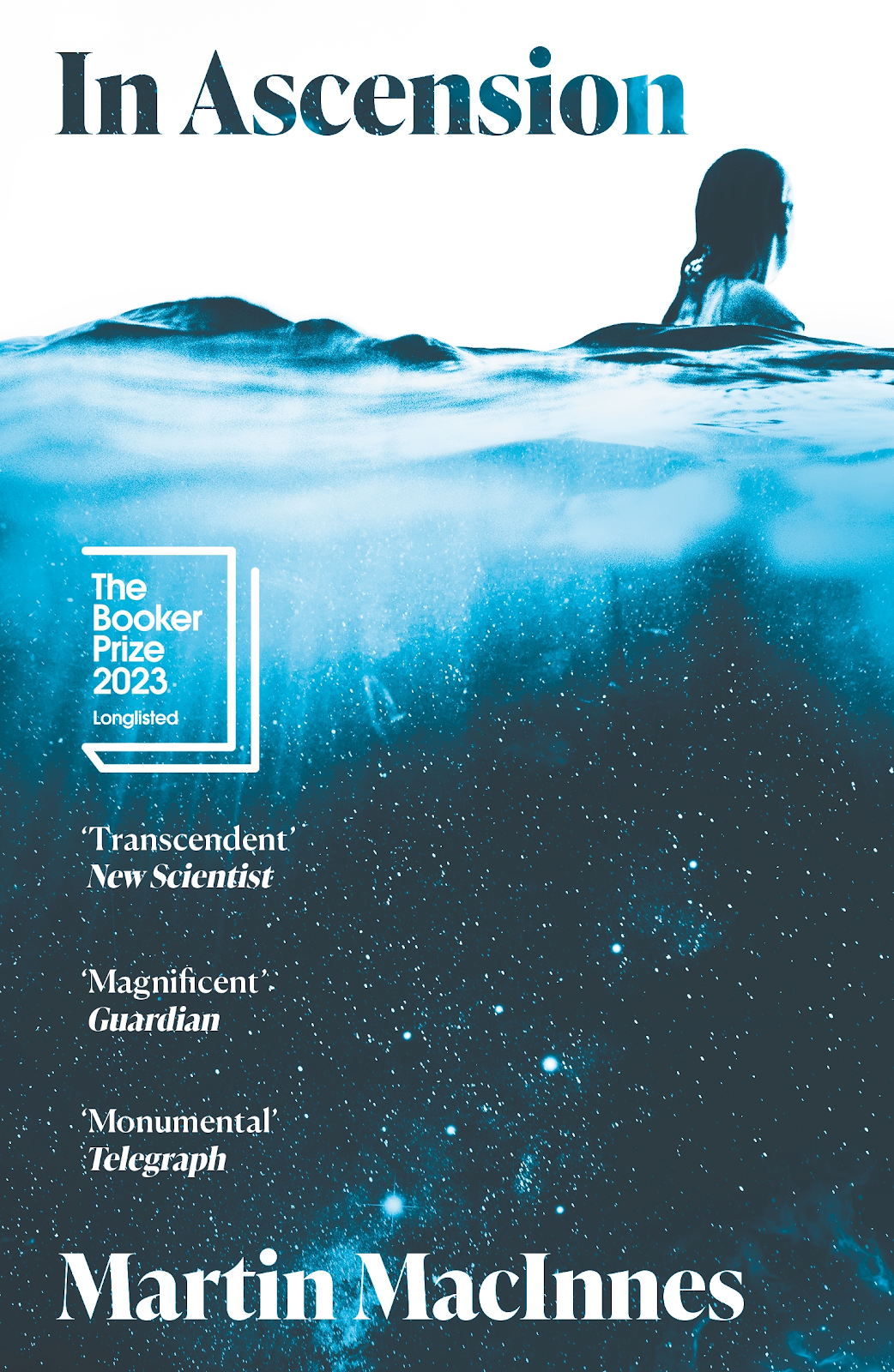
“In Ascension” by Martin MacInnes is a unique novel that seamlessly blends elements of science fiction, environmentalism, and psychological exploration, offering readers a thought-provoking journey through time, space, and the depths of the human heart.
The narrative follows Leigh, a Rotterdam-native who escapes her turbulent home life by immersing
herself in the enchanting undersea world. Excelling in marine biology, Leigh's passion takes her around the globe to study ancient organisms. Her adventurous spirit leads her to an enigmatic trench in the Atlantic, where what she discovers not only challenges established knowledge about life’s origins but also beckons her into a series of phenomenal events connected by a mysterious pattern.

As MacInnes unveils Leigh’s discovery, readers are introduced to a newly formed space agency in the Mojave Desert, ambitious and shrouded in secrecy. Each discovered phenomenon across the globe seems interconnected, suggesting a cosmic pattern beyond human comprehension. Leigh faces a poignant dilemma: should she stay with her ailing mother and sister, or embark on a cosmic journey to unravel the mysteries of existence?


Through Leigh’s eyes, the novel ingeniously intertwines her personal struggles and desires with her deep connection to life and the environment. MacInnes crafts a character who is straightforward in her desires yet profoundly connected to all life forms, making Leigh's journey deeply relatable and emotionally stirring for readers.

With its meticulous attention to detail, “In Ascension” captivates with its description of various Earth locations, providing readers with a sense of wonder typically reserved for the stars. It’s a tale that prompts readers to re-view their immediate surroundings and ponder the vast universe enveloping them, echoing the awe one might feel under a starlit sky unspoiled by light pollution.

The novel’s shift between settings—space, ocean depths, and terrestrial life—can be disorienting but ultimately serves to blur the lines between reality and imagination effectively. This storytelling approach, combined with the vivid depiction of algae playing a pivotal role at life’s edge, engages readers in a continuous exploration of life, time, and consciousness.

“In Ascension” is characterized by its thought-provoking ambiguity and unpretentious exploration of life's big mysteries. MacInnes' narrative not only offers definitive answers but also instills a perpetual sense of wonder, leaving readers with much to contemplate long after the pages are turned.

If you're seeking a novel that is both a contemplative exploration of life and the universe, and an intimate personal journey, “In Ascension” is a treasure worth revisiting, a compelling read inviting contemplation on life, the environment, and the interconnectedness of all existence.

#BookReview #InAscension #MartinMacInnes 

View all my reviews

Thursday, April 6, 2023

Review: To Be Taught, If Fortunate, by Becky Chambers, 2019

To Be Taught, If Fortunate To Be Taught, If Fortunate by Becky Chambers, 2019
My rating: 2 of 5 stars

"To Be Taught, If Fortunate" by Becky Chambers follows a four-person crew of astronauts as they navigate the complexities of a mission called the Lawki Program. Tasked with exploring four exoplanets in a distant solar system, the crew faces numerous challenges and unique experiences that test their resilience and adaptability. As the astronauts venture into the unknown, the reader is presented with a thought-provoking look at the ethics of space exploration and the responsibility humans have when encountering new ecosystems.

While the pacing of the novel may be slow for some readers, the rich detail and carefully crafted plot prevent the story from becoming monotonous. Each planet the crew visits presents a new set of challenges and intriguing discoveries, keeping the reader engaged and eager to learn more about these distant worlds.

Despite not finding any of the characters particularly memorable, the author's world-building and depiction of the various planets and ecosystems are commendable. The unique solutions the characters use to address difficulties, such as somaforming and cryosleep, are fascinating and showcase the author's creativity.

Chambers' writing style is engaging and easy to follow, making it a pleasure to read about the intricate worlds and characters she creates. Although the book may not resonate strongly in terms of themes and messages, it offers a thought-provoking and captivating journey through distant worlds.

In summary, "To Be Taught, If Fortunate" is a slow-paced but thought-provoking exploration of the human spirit, science, and the vast possibilities of space, offering readers an introspective journey through the challenges and wonders of the cosmos.

I rate this novel 2 out of 5 stars.

#ToBeTaughtIfFortunate #BeckyChambers #SpaceExploration #ScienceFiction #Exoplanets #Astronauts #Somaforming #Cryosleep #WorldBuilding #SciFiNovel


View all my reviews


*****   SPOILERS  *****

. Here's a play-by-play of the major events in the story:

Introduction of the Crew and Mission:
We are introduced to the four astronauts: Ariadne O'Neill (the narrator), Jack Vo, Elena Quesada-Cruz, and Chikondi Daka. They embark on a mission to study four exoplanets in the Zhenyi system, which is 14 light-years away from Earth.

Somaforming and Cryosleep:
To adapt to the various environments on the exoplanets, the astronauts undergo a process called somaforming, which temporarily alters their biology. They also spend a significant amount of time in cryosleep during the journey to the Zhenyi system.

Arrival at Aecor:
The first exoplanet the crew explores is Aecor, an icy and cold world. They discover an ecosystem below the ice, including a slug-like creature they name "ice slugs."

Exploration of Mirabilis:
The second planet the crew visits is Mirabilis, a hot and humid world. They encounter a diverse range of plant and animal life, including a giant, tentacled creature they call the "bog wraith."

Studying Opera:
The third planet on their journey is Opera, a world with a thick atmosphere and a deep ocean. They find an ecosystem thriving in the ocean's depths, where they encounter bioluminescent creatures and a massive sea creature called the "titan leviathan."

Arrival at Votum:
The fourth and final planet is Votum, a desert-like world. They discover plant life that thrives on minerals and a species of social insects called the "sandkin."

The Morality Question:
As they explore the planets, the crew grapples with the ethical implications of their mission and the potential consequences of their presence on these ecosystems.

Losing Contact with Earth:
The crew loses contact with Earth and discovers that there have been significant political and social changes on their home planet. They are unsure of whether to continue their mission or return home.

Decision Time:
As the story draws to a close, the crew must make a decision about their future. They choose to send a message back to Earth, asking for guidance on whether they should return or continue exploring. The novella ends with Ariadne addressing the people of Earth, emphasizing the importance of learning, growing, and connecting with one another.

Monday, December 5, 2022

Review: Amatka, by Karin Tidbeck, 2012

Amatka Amatka by Karin Tidbeck
My rating: 5 of 5 stars

Amatka, by Karin Tidbeck, 2012 

Name it! Mark it! Do not deviate!

Originally written in Swedish and translated to English in 2017, Amatka is a "soft" sci-fi novel that is "quiet," strange and has no clear ending. The story follows Vanya, who works for her city government of Essre.  While on assignment to study hygiene products used in the city of Amatka, she falls in love with Nina and moves in with her. 

Set in a world shaped by language, we quickly learn that things are not what they seem when Vanya's luggage melts into gloop when Vanya neglects it for too long, reciting the suitcase's name and physically inscribing it with the word "suitcase" to describe what it is. It's apparent the inhabitants of this world speak the names of things around them, calling on them to remain what they are and marking them for what they are.

Tidbeck's prose is easy to ingest and engenders the slow horror of a quiet atmosphere of slow decay, not much unlike the current state of society.

I rate this novel a 4.95 out of 5 stars.

#Amatka #KarinTidbeck #QueerLiterature #LGBTLiterature #Swedish #ScienceFiction

View all my reviews