"Factoring Humanity" by Robert J. Sawyer, 1999
For a "first contact" sci-fi story, there isn't a lot of "hard SF". This book is more like "hard SF-lite".
This one borrowed heavily from Sagan's "Contact" (which was hard SF, par exemplar, and also had great character development and deep philosophical implications on several levels, but I digress..) and dabbles a bit in 4 dimensional geometry, quantum computing and cosmic consciousness. The characters are sort of ill-defined (except for the AI who seemed deeper and more human than the homo sapiens), but the plot keeps things moving. If you want an enjoyable light read that has just a bit of science in the fiction, Sawyer is your guy for plot-driven page-turners
My Rating: ★★★☆☆ (3 out of 5 stars) - I liked it.
Tuesday, January 24, 2017
Thursday, September 22, 2016
"Starfire" by B.V. Larson and Thomas LeMay, 2014
The author made up a nation called the United States and one called Russia. Gave them some alien tech in an alt-history and then made up a US government that operates unlike any proper government. The author made up some science and tech and made it act remotely according to the laws of physics.
This is part SciFi part "espionage." It lost three stars for one reason, it stopped; it just stopped. It's as if the author just decided not to write any more. Of course, this could be part one of a series but even at that, the active characters need some kind of resolution of their current circumstances and sitting on the beach looking up at distant sniper/guards isn't much resolution. No resolution for one of the key characters, this book just stops. There isn't even some tickler, a hint of direction, anything that would want you to pick up the next book in the series (if there is one).
As others have observed, the characters aren't compelling, largely stereotypical, no one is particularly unique. Spoiler alert... the simple plot is some type of alien craft broke up into three pieces and crashed on earth in the early 1900's. The Russians have a piece, the Americans have a piece. The Russian piece calls home to a moon of Jupiter. The Americans in an alien ship chase the Russians with an adapted alien drive to Europa, the moon. It doesn't work out well and some of the Americans and one Russian make it back to Earth with nothing but their lives and a lot of questions.
My rating ★★☆☆☆ (2 out of 5 stars) - It was ok.
The author made up a nation called the United States and one called Russia. Gave them some alien tech in an alt-history and then made up a US government that operates unlike any proper government. The author made up some science and tech and made it act remotely according to the laws of physics.
This is part SciFi part "espionage." It lost three stars for one reason, it stopped; it just stopped. It's as if the author just decided not to write any more. Of course, this could be part one of a series but even at that, the active characters need some kind of resolution of their current circumstances and sitting on the beach looking up at distant sniper/guards isn't much resolution. No resolution for one of the key characters, this book just stops. There isn't even some tickler, a hint of direction, anything that would want you to pick up the next book in the series (if there is one).
As others have observed, the characters aren't compelling, largely stereotypical, no one is particularly unique. Spoiler alert... the simple plot is some type of alien craft broke up into three pieces and crashed on earth in the early 1900's. The Russians have a piece, the Americans have a piece. The Russian piece calls home to a moon of Jupiter. The Americans in an alien ship chase the Russians with an adapted alien drive to Europa, the moon. It doesn't work out well and some of the Americans and one Russian make it back to Earth with nothing but their lives and a lot of questions.
My rating ★★☆☆☆ (2 out of 5 stars) - It was ok.
Tuesday, August 16, 2016
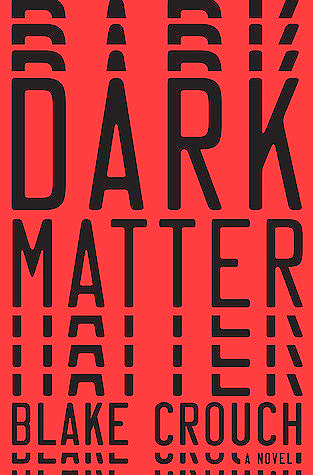
"Dark Matter" by Blake Crouch, 2016
Crouch has written an imaginative novel encompassing quantum physics and how it affects the choices a person makes in life. At times sweetly romantic for a science fiction story, Dark Matter explores how even minor decisions serve to eventually define the person we become. Jason is literally offered an infinite number of escape paths, but only a finite number of choices. One wrong decision can separate him from his family forever.
The novel is written in Jason’s first person perspective. I don’t have a problem with first person, but the author uses a flat writing technique with short choppy paragraphs that are oddly jarring until I settled into his style. As with the Crouch's Wayward Pines series of books, parts of story where the author is building suspense, especially in the beginning, can be frustratingly annoying and abrupt.
While Jason is likeable, the weakest parts in Dark Matter concern secondary characters. The villain in the alternate world attempts to keep Jason from returning to his ‘real’ life, but his motivation is irrational. Other than the fact that the story needs a protagonist, I didn’t see a logical reason for him to be so determined to separate Jason from his family. He’s rotten, but pointless. So is the woman who plays an important role in Jason’s escape attempt. She disappears halfway through the story. You learn little about her, her character is barely developed. Considering her pivotal role, nothing about her stands out. She’s more like a tool for Jason to use rather than a real person.
All told, Dark Matter is an interesting read that goes quickly, and explores questions about reality and choice not usual in science fiction.
★★★★☆ (4 out of 5 stars) - I really liked it.
Book jacket description:
“Are you happy with your life?” Those are the last words Jason Dessen hears before the masked abductor knocks him unconscious. Before he awakens to find himself strapped to a gurney, surrounded by strangers in hazmat suits. Before a man Jason’s never met smiles down at him and says, “Welcome back, my friend.”
In this world he’s woken up to, Jason’s life is not the one he knows. His wife is not his wife. His son was never born. And Jason is not an ordinary college physics professor but a celebrated genius who has achieved something remarkable--something impossible.
Is it this world or the other that’s the dream? And even if the home he remembers is real, how can Jason possibly make it back to the family he loves? The answers lie in a journey more wondrous and horrifying than anything he could’ve imagined—one that will force him to confront the darkest parts of himself even as he battles a terrifying, seemingly unbeatable foe.
Crouch has written an imaginative novel encompassing quantum physics and how it affects the choices a person makes in life. At times sweetly romantic for a science fiction story, Dark Matter explores how even minor decisions serve to eventually define the person we become. Jason is literally offered an infinite number of escape paths, but only a finite number of choices. One wrong decision can separate him from his family forever.
The novel is written in Jason’s first person perspective. I don’t have a problem with first person, but the author uses a flat writing technique with short choppy paragraphs that are oddly jarring until I settled into his style. As with the Crouch's Wayward Pines series of books, parts of story where the author is building suspense, especially in the beginning, can be frustratingly annoying and abrupt.
While Jason is likeable, the weakest parts in Dark Matter concern secondary characters. The villain in the alternate world attempts to keep Jason from returning to his ‘real’ life, but his motivation is irrational. Other than the fact that the story needs a protagonist, I didn’t see a logical reason for him to be so determined to separate Jason from his family. He’s rotten, but pointless. So is the woman who plays an important role in Jason’s escape attempt. She disappears halfway through the story. You learn little about her, her character is barely developed. Considering her pivotal role, nothing about her stands out. She’s more like a tool for Jason to use rather than a real person.
All told, Dark Matter is an interesting read that goes quickly, and explores questions about reality and choice not usual in science fiction.
★★★★☆ (4 out of 5 stars) - I really liked it.
Book jacket description:
“Are you happy with your life?” Those are the last words Jason Dessen hears before the masked abductor knocks him unconscious. Before he awakens to find himself strapped to a gurney, surrounded by strangers in hazmat suits. Before a man Jason’s never met smiles down at him and says, “Welcome back, my friend.”
In this world he’s woken up to, Jason’s life is not the one he knows. His wife is not his wife. His son was never born. And Jason is not an ordinary college physics professor but a celebrated genius who has achieved something remarkable--something impossible.
Is it this world or the other that’s the dream? And even if the home he remembers is real, how can Jason possibly make it back to the family he loves? The answers lie in a journey more wondrous and horrifying than anything he could’ve imagined—one that will force him to confront the darkest parts of himself even as he battles a terrifying, seemingly unbeatable foe.
Monday, August 8, 2016
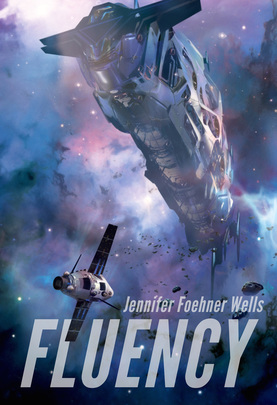
Fluency (Confluence #1), byJennifer Foehner Wells, 2014
Littered with plenty of nods and winks to classic sci-fi and some clever pop culture references, Fluency is a thrilling, bumpy ride that rarely falters.
Borrowing from many classic sci-fi themes, Fluency centers around the discovery of an alien spaceship seemingly marooned in a nearby asteroid belt. Linguist Dr. Jane Holloway is recruited reluctantly to join an exploration to discover the secrets of the ship, known to NASA since the 60’s as “The Target”.
Once they arrive however Holloway discovers that the ship is not entirely abandoned and the ship’s alien navigator quickly contacts her telepathically and starts to reveal the secrets of the ship and its past to her, preparing her for an experience she could never have expected.
Fluency moves at a breakneck pace in a very cinematic fashion, the narrative mostly linear with some minor flashbacks to fill in gaps in the back story. Wells does a fine job of dealing with the technical side of proceedings without resorting to complicated jargon. The human technology is believable and the alien technology while advanced, is also impressively practical.
While much of the story concerns Holloway as the protagonist, her relationship with the rest of her crew is a difficult one, with some of the crew believing she is being manipulated by the alien Ei’Brai and particularly Walsh, her commander distrusting them both. As events unfold it becomes clear that there is great danger on board and relationships become strained as the crew fight both for survival and command. As the story progresses, Holloway develops a painfully slow relationship with fellow crew member Alan Bergen who’s sometimes schoolboyish behavior towards her provides plenty of sexual tension and his frustration towards Holloway and Ei’Brai’s developing connection also provides a few laughs at times as it seems he just can’t catch a break. Some of the other crew members tend to get lost in the narrative at times, with the pace allowing little development to their characters but where some might see this as a flaw in the writing, others may see it as a tribute to Star Trek’s classic dispensable Redshirts, allowing the main players to confidently take center stage.
While the strong female character has become a bit of a cliché in sci-fi over the past few years, it’s worth noting that many of these female characters have been written by men. What makes Fluency so refreshing is that Holloway’s character develops in a much more believable fashion given her circumstances. Sure she has to eventually toughen up and fight, but she’s much more than that. She’s a brilliant mind faced with a life-changing event and not just her life but the entire planet’s and her decisions will have monumental consequences. Her ability to focus is paramount and though it may seem she is being manipulated at times, she quickly takes control of her relationship with Ei’Brai. As the story reaches its gripping conclusion it also lays the groundwork for an exciting continuation of this rapidly unfolding saga.
My rating: ★★★★★ (5 out of 5 stars) - Wow. I loved it!
Littered with plenty of nods and winks to classic sci-fi and some clever pop culture references, Fluency is a thrilling, bumpy ride that rarely falters.
Borrowing from many classic sci-fi themes, Fluency centers around the discovery of an alien spaceship seemingly marooned in a nearby asteroid belt. Linguist Dr. Jane Holloway is recruited reluctantly to join an exploration to discover the secrets of the ship, known to NASA since the 60’s as “The Target”.
Once they arrive however Holloway discovers that the ship is not entirely abandoned and the ship’s alien navigator quickly contacts her telepathically and starts to reveal the secrets of the ship and its past to her, preparing her for an experience she could never have expected.
Fluency moves at a breakneck pace in a very cinematic fashion, the narrative mostly linear with some minor flashbacks to fill in gaps in the back story. Wells does a fine job of dealing with the technical side of proceedings without resorting to complicated jargon. The human technology is believable and the alien technology while advanced, is also impressively practical.
While much of the story concerns Holloway as the protagonist, her relationship with the rest of her crew is a difficult one, with some of the crew believing she is being manipulated by the alien Ei’Brai and particularly Walsh, her commander distrusting them both. As events unfold it becomes clear that there is great danger on board and relationships become strained as the crew fight both for survival and command. As the story progresses, Holloway develops a painfully slow relationship with fellow crew member Alan Bergen who’s sometimes schoolboyish behavior towards her provides plenty of sexual tension and his frustration towards Holloway and Ei’Brai’s developing connection also provides a few laughs at times as it seems he just can’t catch a break. Some of the other crew members tend to get lost in the narrative at times, with the pace allowing little development to their characters but where some might see this as a flaw in the writing, others may see it as a tribute to Star Trek’s classic dispensable Redshirts, allowing the main players to confidently take center stage.
While the strong female character has become a bit of a cliché in sci-fi over the past few years, it’s worth noting that many of these female characters have been written by men. What makes Fluency so refreshing is that Holloway’s character develops in a much more believable fashion given her circumstances. Sure she has to eventually toughen up and fight, but she’s much more than that. She’s a brilliant mind faced with a life-changing event and not just her life but the entire planet’s and her decisions will have monumental consequences. Her ability to focus is paramount and though it may seem she is being manipulated at times, she quickly takes control of her relationship with Ei’Brai. As the story reaches its gripping conclusion it also lays the groundwork for an exciting continuation of this rapidly unfolding saga.
My rating: ★★★★★ (5 out of 5 stars) - Wow. I loved it!
Thursday, July 28, 2016
A Princess of Mars (Barsoom #1) (John Carter), by Edgar Rice Burroughs, 1912
This is Edgar Rice Burroughs's first novel, and he obviously had some growing pains to go through first. But he got up to speed extremely quickly.
"A Princess of Mars" is imaginative, far exceeding anything else written in science-fiction before it. H. G. Welles wrote allegorical and social-commentary science-fiction, and Verne concentrated on scientific prediction. But Burroughs essentially took an old-fashioned Knight-errant story and tossed it onto Mars. The result: a fastasia of plutonium guns, sword fighting, flying platforms, 15 ft. green aliens, and ferocious four-armed white apes. Outrageous, ridiculous, and oh so much fun!
Burroughs has some difficulty structuring this first novel, and the events do not fit together as well as his later works. Especially in the first fifty pages. Also, some of the stodgy poeticisms of earlier fantasy and sci-fi haven't quite left his pen.
In a few more novels, he would trim his style down even further and revolutionize popular literature. With only his next book, "Tarzan of the Apes" (you've probably heard of it), he would make vast improvements in plotting and characterization.
My rating: ★★☆☆☆ (2 out of 5 stars) - It was okay.
Book description from its jacket:
A Princess of Mars (1917) is a science fantasy novel by Edgar Rice Burroughs, the first of his Barsoom series. Full of swordplay and daring feats, the novel is considered a classic example of 20th century pulp fiction. It is also a seminal instance of the planetary romance, a sub-genre of science fantasy that became highly popular in the decades following its publication. Its early chapters also contain elements of the Western. The story is set on Mars, imagined as a dying planet with a harsh desert environment. This vision of Mars was based on the work of the astronomer Percival Lowell, whose ideas were widely popularized in the late 19th and early 20th centuries. The Barsoom series inspired a number of well-known 20th century science fiction writers, including Jack Vance, Ray Bradbury, Arthur C. Clarke, Robert A. Heinlein, and John Norman. The series was also inspirational for many scientists in the fields of space exploration and the search for extraterrestrial life, including Carl Sagan, who read A Princess of Mars when he was a child.
From Wikipedia:
Plot summary
John Carter, a Confederate veteran of the American Civil War, goes prospecting in Arizona immediately after the war's end. Having struck a rich vein of gold, he runs afoul of the Apaches. While attempting to evade pursuit by hiding in a sacred cave, he is mysteriously transported to Mars, called "Barsoom" by its inhabitants. Carter finds that he has great strength and superhuman agility in this new environment as a result of its lesser gravity and lower atmospheric pressure. He soon falls in with a nomadic tribe of Green Martians, or Tharks, as the planet's warlike, six-limbed, green-skinned inhabitants are known. Thanks to his strength and martial prowess, Carter rises to a high position in the tribe and earns the respect and eventually the friendship of Tars Tarkas, one of the Thark chiefs.
The Tharks subsequently capture Dejah Thoris, Princess of Helium, a member of the humanoid red Martian race. The red Martians inhabit a loose network of city-states and control the desert planet's canals, along which its agriculture is concentrated. Carter rescues Dejah Thoris from the green men in a bid to return her to her people.
Subsequently Carter becomes embroiled in the political affairs of both the red and green Martians in his efforts to safeguard Dejah Thoris, eventually leading a horde of Tharks against the city-state of Zodanga, the historic enemy of Helium. Winning Dejah Thoris' heart, he becomes Prince of Helium, and the two live happily together for nine years. However, the sudden breakdown of the Atmosphere Plant that sustains the planet's waning air supply endangers all life on Barsoom. In a desperate attempt to save the planet's inhabitants, Carter uses a secret telepathic code to enter the factory, bringing an engineer along who can restore its functionality. Carter then succumbs to asphyxiation, only to awaken back on Earth, left to wonder what has become of Barsoom and his beloved.
Characters
John Carter: An Earthman from Virginia with a mysterious background, Captain John Carter fought in the American Civil War on the Confederate side.[1] At the war's end he goes prospecting for gold in Arizona. After various adventures, including an attack by Apaches, he is miraculously transported to Mars. During his nine years on that planet he effectively disappears from Earth and is believed dead, but he re-emerges in New York in 1876, settling in a house overlooking the Hudson River. He apparently dies again in 1886, leaving instructions for a fictionalized Burroughs, who refers to Carter as his Uncle Jack, to entomb him in a crypt. He also leaves Burroughs with the manuscript of A Princess of Mars, with instructions not to publish it for another 21 years.[2] John Carter states that he has no memory before the age of 30 and has always appeared the same, without aging. He is adept at strategy, horsemanship, and all weapons, including firearms and swords. He is 6'2" tall, clean-shaven, with close-cropped black hair and steel gray eyes.[1] He is honorable, courageous, and eternally optimistic, even in the face of certain death.[3] From the Green Martians he received the name "Dotar Sojat," after the first two green warriors whom he slew after his advent on Barsoom. He sometimes uses this name as an alias in later books of the Martian series.
Dejah Thoris: A red Martian princess of Helium, she is courageous, resolute, and frequently in mortal danger or under threat of dishonor by the lustful designs of a succession of villains. She is the daughter of Mors Kajak, Jed (chieftain) of Lesser Helium, and the granddaughter of Tardos Mors, Jeddak (overlord or high king) of Helium. As such she is highly aristocratic and fiercely proud of her heritage.[4] Introduced early in the novel, she immediately becomes the love interest of John Carter.[5] As a central character in the first three Barsoom novels, her frequent capture by various enemies, and subsequent pursuit by John Carter, is a constant motivating element in their plots.
Tars Tarkas: A fierce Green Martian warrior from the tribe of Thark, he is unusual among his race for his ability to experience tender emotions such as friendship and love. His emotional development stems from a forbidden love affair in his youth, when he secretly began a partnership with a Green Martian woman named Gozava. He befriends John Carter and later fights at his side. Carter helps him become Jeddak of Thark and negotiates an alliance between the Green Martians and the city-state of Helium, which results in the destruction of Helium's enemy, Zodanga.[2] Tars Tarkas more than once displays an ironic sense of humor; he mocks John Carter's perception of himself as "a cruel green warrior" while fighting beside him, and in The Gods of Mars he comments on the disappointment of Barsoomian hopes for the afterlife.
Sola: Daughter of Tars Tarkas and a friend of John Carter, she teaches him the Barsoomian language and the history of her race, as well as the secret of her own parentage. She appears in the immediate sequels to A Princess of Mars, but has no role in later books of the series.
Sarkoja: A Green Martian woman whose intrigues resulted in the death of Gozava and who schemes against John Carter. After Carter tells Tars Tarkas about her role in Gozava's death, she is frightened into a self-imposed exile and never heard from again.
Kantos Kan: A warrior of Helium who escapes a Warhoon prison with John Carter. By the beginning of the second book, Kantos Kan is the chief commander of Helium's navy.
This is Edgar Rice Burroughs's first novel, and he obviously had some growing pains to go through first. But he got up to speed extremely quickly.
"A Princess of Mars" is imaginative, far exceeding anything else written in science-fiction before it. H. G. Welles wrote allegorical and social-commentary science-fiction, and Verne concentrated on scientific prediction. But Burroughs essentially took an old-fashioned Knight-errant story and tossed it onto Mars. The result: a fastasia of plutonium guns, sword fighting, flying platforms, 15 ft. green aliens, and ferocious four-armed white apes. Outrageous, ridiculous, and oh so much fun!
Burroughs has some difficulty structuring this first novel, and the events do not fit together as well as his later works. Especially in the first fifty pages. Also, some of the stodgy poeticisms of earlier fantasy and sci-fi haven't quite left his pen.
In a few more novels, he would trim his style down even further and revolutionize popular literature. With only his next book, "Tarzan of the Apes" (you've probably heard of it), he would make vast improvements in plotting and characterization.
My rating: ★★☆☆☆ (2 out of 5 stars) - It was okay.
Book description from its jacket:
A Princess of Mars (1917) is a science fantasy novel by Edgar Rice Burroughs, the first of his Barsoom series. Full of swordplay and daring feats, the novel is considered a classic example of 20th century pulp fiction. It is also a seminal instance of the planetary romance, a sub-genre of science fantasy that became highly popular in the decades following its publication. Its early chapters also contain elements of the Western. The story is set on Mars, imagined as a dying planet with a harsh desert environment. This vision of Mars was based on the work of the astronomer Percival Lowell, whose ideas were widely popularized in the late 19th and early 20th centuries. The Barsoom series inspired a number of well-known 20th century science fiction writers, including Jack Vance, Ray Bradbury, Arthur C. Clarke, Robert A. Heinlein, and John Norman. The series was also inspirational for many scientists in the fields of space exploration and the search for extraterrestrial life, including Carl Sagan, who read A Princess of Mars when he was a child.
From Wikipedia:
Plot summary
John Carter, a Confederate veteran of the American Civil War, goes prospecting in Arizona immediately after the war's end. Having struck a rich vein of gold, he runs afoul of the Apaches. While attempting to evade pursuit by hiding in a sacred cave, he is mysteriously transported to Mars, called "Barsoom" by its inhabitants. Carter finds that he has great strength and superhuman agility in this new environment as a result of its lesser gravity and lower atmospheric pressure. He soon falls in with a nomadic tribe of Green Martians, or Tharks, as the planet's warlike, six-limbed, green-skinned inhabitants are known. Thanks to his strength and martial prowess, Carter rises to a high position in the tribe and earns the respect and eventually the friendship of Tars Tarkas, one of the Thark chiefs.
The Tharks subsequently capture Dejah Thoris, Princess of Helium, a member of the humanoid red Martian race. The red Martians inhabit a loose network of city-states and control the desert planet's canals, along which its agriculture is concentrated. Carter rescues Dejah Thoris from the green men in a bid to return her to her people.
Subsequently Carter becomes embroiled in the political affairs of both the red and green Martians in his efforts to safeguard Dejah Thoris, eventually leading a horde of Tharks against the city-state of Zodanga, the historic enemy of Helium. Winning Dejah Thoris' heart, he becomes Prince of Helium, and the two live happily together for nine years. However, the sudden breakdown of the Atmosphere Plant that sustains the planet's waning air supply endangers all life on Barsoom. In a desperate attempt to save the planet's inhabitants, Carter uses a secret telepathic code to enter the factory, bringing an engineer along who can restore its functionality. Carter then succumbs to asphyxiation, only to awaken back on Earth, left to wonder what has become of Barsoom and his beloved.
Characters
John Carter: An Earthman from Virginia with a mysterious background, Captain John Carter fought in the American Civil War on the Confederate side.[1] At the war's end he goes prospecting for gold in Arizona. After various adventures, including an attack by Apaches, he is miraculously transported to Mars. During his nine years on that planet he effectively disappears from Earth and is believed dead, but he re-emerges in New York in 1876, settling in a house overlooking the Hudson River. He apparently dies again in 1886, leaving instructions for a fictionalized Burroughs, who refers to Carter as his Uncle Jack, to entomb him in a crypt. He also leaves Burroughs with the manuscript of A Princess of Mars, with instructions not to publish it for another 21 years.[2] John Carter states that he has no memory before the age of 30 and has always appeared the same, without aging. He is adept at strategy, horsemanship, and all weapons, including firearms and swords. He is 6'2" tall, clean-shaven, with close-cropped black hair and steel gray eyes.[1] He is honorable, courageous, and eternally optimistic, even in the face of certain death.[3] From the Green Martians he received the name "Dotar Sojat," after the first two green warriors whom he slew after his advent on Barsoom. He sometimes uses this name as an alias in later books of the Martian series.
Dejah Thoris: A red Martian princess of Helium, she is courageous, resolute, and frequently in mortal danger or under threat of dishonor by the lustful designs of a succession of villains. She is the daughter of Mors Kajak, Jed (chieftain) of Lesser Helium, and the granddaughter of Tardos Mors, Jeddak (overlord or high king) of Helium. As such she is highly aristocratic and fiercely proud of her heritage.[4] Introduced early in the novel, she immediately becomes the love interest of John Carter.[5] As a central character in the first three Barsoom novels, her frequent capture by various enemies, and subsequent pursuit by John Carter, is a constant motivating element in their plots.
Tars Tarkas: A fierce Green Martian warrior from the tribe of Thark, he is unusual among his race for his ability to experience tender emotions such as friendship and love. His emotional development stems from a forbidden love affair in his youth, when he secretly began a partnership with a Green Martian woman named Gozava. He befriends John Carter and later fights at his side. Carter helps him become Jeddak of Thark and negotiates an alliance between the Green Martians and the city-state of Helium, which results in the destruction of Helium's enemy, Zodanga.[2] Tars Tarkas more than once displays an ironic sense of humor; he mocks John Carter's perception of himself as "a cruel green warrior" while fighting beside him, and in The Gods of Mars he comments on the disappointment of Barsoomian hopes for the afterlife.
Sola: Daughter of Tars Tarkas and a friend of John Carter, she teaches him the Barsoomian language and the history of her race, as well as the secret of her own parentage. She appears in the immediate sequels to A Princess of Mars, but has no role in later books of the series.
Sarkoja: A Green Martian woman whose intrigues resulted in the death of Gozava and who schemes against John Carter. After Carter tells Tars Tarkas about her role in Gozava's death, she is frightened into a self-imposed exile and never heard from again.
Kantos Kan: A warrior of Helium who escapes a Warhoon prison with John Carter. By the beginning of the second book, Kantos Kan is the chief commander of Helium's navy.
Tuesday, July 19, 2016
Dreadnought (Lost Colonies Trilogy, #2) by B.V. Larson, 2015
With Dreadnought, BV Larson starts to uplift this series from YA ghetto into more serious SF literature. Don't worry. We are still following the exploits of breezy (and slightly snidely) Sparhawk on his conquests of both the interstellar and sexual kinds. Zey is still fun, but the focus shifts to the slippery detestable Stroj called Lorn, and Yamada develops some interesting depth. The style remains snarky, with still a good deal of Heinlein.
The Battle Cruiser Defiant has been retrofitted with the best of Earth and Beta technology. It's mission is to re-open channels to the Colonies. On board is Sparhawk's Great Aunt Ambassador Lady Granthome who, of course, is constantly meddling in Sparhawk's affairs. The Colonies discovered turn out to have either fallen back into primitivism, barely clinging to survival, or have technologies far in advance of Earth's. And, oops, there's Stroj constantly attacking him. The style is light, moving the story along a breezy and quick pace.
What makes this book better is that the story starts to look beneath the surface of his society. Like Heinlein, Larson uses the story to start challenging accepted social notions like social class, sexual relationships, dynasties, power, and corruption. The last line of the book completely lays open the undercurrent and prepares the reader for the final book of the trilogy.
I recommend starting this series from the first book, Battle Cruiser, as this book assumes that the reader is already familiar with the world and characters from that book. It does not, for example, go into detail as to why the colonies are "lost" again. So new readers will not understand why the Stroj are the bad guys.
My rating: ★★★★★ (5 out of 5 stars) - Wow. I loved it!
With Dreadnought, BV Larson starts to uplift this series from YA ghetto into more serious SF literature. Don't worry. We are still following the exploits of breezy (and slightly snidely) Sparhawk on his conquests of both the interstellar and sexual kinds. Zey is still fun, but the focus shifts to the slippery detestable Stroj called Lorn, and Yamada develops some interesting depth. The style remains snarky, with still a good deal of Heinlein.
The Battle Cruiser Defiant has been retrofitted with the best of Earth and Beta technology. It's mission is to re-open channels to the Colonies. On board is Sparhawk's Great Aunt Ambassador Lady Granthome who, of course, is constantly meddling in Sparhawk's affairs. The Colonies discovered turn out to have either fallen back into primitivism, barely clinging to survival, or have technologies far in advance of Earth's. And, oops, there's Stroj constantly attacking him. The style is light, moving the story along a breezy and quick pace.
What makes this book better is that the story starts to look beneath the surface of his society. Like Heinlein, Larson uses the story to start challenging accepted social notions like social class, sexual relationships, dynasties, power, and corruption. The last line of the book completely lays open the undercurrent and prepares the reader for the final book of the trilogy.
I recommend starting this series from the first book, Battle Cruiser, as this book assumes that the reader is already familiar with the world and characters from that book. It does not, for example, go into detail as to why the colonies are "lost" again. So new readers will not understand why the Stroj are the bad guys.
My rating: ★★★★★ (5 out of 5 stars) - Wow. I loved it!
Labels:
astra,
b.v. larson,
beta,
larson,
lost colony,
military sci-fi,
psai,
sci-fi,
science fiction,
space,
space battle,
sparhawk,
Star Guard Lt. Commander Sparhawk,
starguard,
stroge,
szi,
zai
Tuesday, July 12, 2016
Battle Cruiser (Lost Colonies Trilogy, #1) by B.V. Larson, 2015
Just fantastically entertaining. A little slow at the beginning, but picks up quickly, and has a great
ending. A new universe for Mr. Larson and it could prove very interesting as a series. Some of the science isn't great, but easily overlooked.
When in space, the story is very entertaining. Unfortunately the same can't be said for the "non-space" parts - there is some attempt at political intrigue but it isn't as tightly written and the characters are somewhat flat. The space-action is entertaining and the crew members' characters completely fleshed out and multi-dimensional.
The main character, William Sparhawk, is rebelling against his family's wishes, but it's not really explained why in any interesting detail. The main parties are the politicians, who seem to be opposed to the military section for monetary reasons - and the military who have very few ships, but at least three admirals.
I quite liked the 'universe' setup, so there is here is potential for a decent series, especially if the author concentrates on the space action.
My rating: ★★★★★ (5 out of 5 stars) - Wow. I loved it!
Book description:
A century ago our star erupted, destroying Earth’s wormhole network and closing off trade with her colonized planets. After being out of contact with the younger worlds for so many years, Humanity is shocked when a huge ship appears at the edge of the Solar System. Our outdated navy investigates, both curious and fearful.
What they learn from the massive vessel shocks the planet. The lost colonies have survived—but the reunion isn’t going to be a happy one. Our descendants are vastly superior in the art of warfare. Worse, there are other beings undreamed of beyond the human frontier: strange, unfathomable…alien.
Battle Cruiser Defiant, the first capital ship to darken Earth’s skies, is tasked with exploring new passages to the younger planets. Old Earth must reunite with her children…but can humanity survive the inevitable conflicts? Captain William Sparhawk, determined to follow a path of honor and truthfulness, dares to rise to the challenge.
BATTLE CRUISER is book #1 of the Lost Colonies Trilogy, military science fiction novels by bestselling author B. V. Larson.
Just fantastically entertaining. A little slow at the beginning, but picks up quickly, and has a great
ending. A new universe for Mr. Larson and it could prove very interesting as a series. Some of the science isn't great, but easily overlooked.
When in space, the story is very entertaining. Unfortunately the same can't be said for the "non-space" parts - there is some attempt at political intrigue but it isn't as tightly written and the characters are somewhat flat. The space-action is entertaining and the crew members' characters completely fleshed out and multi-dimensional.
The main character, William Sparhawk, is rebelling against his family's wishes, but it's not really explained why in any interesting detail. The main parties are the politicians, who seem to be opposed to the military section for monetary reasons - and the military who have very few ships, but at least three admirals.
I quite liked the 'universe' setup, so there is here is potential for a decent series, especially if the author concentrates on the space action.
My rating: ★★★★★ (5 out of 5 stars) - Wow. I loved it!
Book description:
A century ago our star erupted, destroying Earth’s wormhole network and closing off trade with her colonized planets. After being out of contact with the younger worlds for so many years, Humanity is shocked when a huge ship appears at the edge of the Solar System. Our outdated navy investigates, both curious and fearful.
What they learn from the massive vessel shocks the planet. The lost colonies have survived—but the reunion isn’t going to be a happy one. Our descendants are vastly superior in the art of warfare. Worse, there are other beings undreamed of beyond the human frontier: strange, unfathomable…alien.
Battle Cruiser Defiant, the first capital ship to darken Earth’s skies, is tasked with exploring new passages to the younger planets. Old Earth must reunite with her children…but can humanity survive the inevitable conflicts? Captain William Sparhawk, determined to follow a path of honor and truthfulness, dares to rise to the challenge.
BATTLE CRUISER is book #1 of the Lost Colonies Trilogy, military science fiction novels by bestselling author B. V. Larson.
Labels:
astra,
b.v. larson,
beta,
larson,
lost colony,
military sci-fi,
psai,
sci-fi,
science fiction,
space,
space battle,
sparhawk,
Star Guard Lt. Commander Sparhawk,
starguard,
stroge,
szi,
zai
Subscribe to:
Comments (Atom)