Monday, March 5, 2018

"Annihilation (Southern Reach, #1)" by Jeff VanderMeer, 2014

"Annihilation (Southern Reach, #1)" by Jeff VanderMeer, 2014


In Annihilation, the novelist and publishing entrepreneur Jeff VanderMeer sets out to create a lasting monument to the uncanny by revisiting – without embellishment, and with a pitiless focus on physical and psychological detail – some very old ground. An alien invasion site. Assimilative spores. An unfurling of promiscuous alien biology.
On the first page we are told that the women's enterprise is doomed. Their equipment is either nonsensical, or inadequate, or antiquated. Their training and instructions are sometimes vague, sometimes misleading. They cannot recall the moment they crossed into Area X, and they have no clear idea how they will leave. They cannot agree about what they are seeing (a shaft? a tower? a throat?) and three of them are all the while half-aware of being hypnotically manipulated by their team leader.

The uncanny, by VanderMeer's measure, is not, and never was, a thing. It is, and has always been, the actual state of the world. Familiarity is a fiction we perpetuate through psychological necessity. The closer the nameless biologist comes to this reazisation, the more she falls back on her scientific training – not in any petulant, pedantic way, but rather as a means of limiting the kinds of questions she needs to ask the world, and of her rapidly transmogrifying self.You enter Area X with them, thinking the uncanny must lurk in some particular spot. The lighthouse? The reed beds? The "tower"? Very quickly you spot your mistake, as a subtle, well-engineered wrongness turns up in every character, every deed, every observation until, at last, you find yourself afraid to turn the page.
Infected early in the book, she wonders if she has "changed sides", become more "X" than human. She decides the question is meaningless. "A religious or superstitious person, someone who believed in angels or in demons, might see it differently. Almost anyone else might see it differently. But I am not those people, I am just the biologist; I don't require any of this to have a deeper meaning."
From this self-destructively objective vantage point, there can be no "us" or "them", no threshold to cross, no home to flee to when all's done. Science is there to handle the uncanny, and the biologist's declaration near the end of the book – "Our instruments are useless, our methodology broken, our motivations selfish" – is anything but an expression of doubt. It is as stirring in its admission of human frailty and ambition as Beckett's "You must go on. / I can't go on. / I'll go on."

A suspenseful book, Annihilation catches one's attention with a powerful narrator and a fantastical world. The voice of the biologist is strong, creating a kinship between the main character and the reader, and her need to uncover the truth of Area X draws the reader in. Furthermore, VanderMeer's skill in writing is showcased through powerful scenic description that conjures a new world before the mind's eye. The reader becomes entranced, sharing the biologist's need to discover the unknown of Area X no matter the cost. However, the book creates more questions than it answers, ultimately leaving the reader confused. We are given thousands of possibilities as to what Area X could be, but by the end the reader feels as if they know less than they knew in the beginning. All in all, Annihilation is a gripping book that keeps one reading long into the night. Those interested in science fiction with beautiful prose and magical scenery will be unable to put it down, while those with an interest in mystery will be pulled along by the story waiting to be uncovered from the very first pages of the book. This is reinforced by the strong main character, ultimately creating an all-around sensational reading experience. 

My rating: ★★★★★ (5 out of 5 stars) - Wow. I loved it!


Plot from Wikipedia:

Plot[edit]

A team of four cross the border into an uninhabited area known as Area X. The group consists of an anthropologist, surveyor, biologist, and psychologist. None of the team is ever identified by name. The story is told through the biologist's field journal. They are part of the 12th expedition into Area X, and it is revealed that the biologist's husband was part of the previous expedition into the same area. The narrator's husband returned unexpectedly from the expedition, showing up in their kitchen without any recollection of how he got there. The rest of his expedition show up similarly. A few months later he died of cancer along with the others in the 11th expedition.
After the first night spent at the base camp, the 12th expedition come upon a set of spiral stairs into the ground. Inside the staircase (which the biologist repeatedly calls a tower), they find cursive writing that begins with the words "Where lies the strangling fruit...." The writing appears to consist of a plant material growing several inches from the exterior wall. While the biologist is examining the writing, she accidentally inhales spores from one of the script-defining growths. After returning from the tower, the biologist discovers that the psychologist, who is the appointed leader, has programmed the group with certain triggers via hypnosis. By saying the phrase "consolidation of authority," everyone except the biologist immediately enters a state of hypnosis. The biologist believes that the spores she has inhaled have made her immune to the hypnotic suggestions and influence of the psychologist. The group decides to return to base camp for the night. At dusk, they hear a moaning noise from far away.
"Where lies the strangling fruit that came from the hand of the sinner I shall bring forth the seeds of the dead to share with the worms that gather in the darkness and surround the world with the power of their lives while from the dim lit halls of other places forms that never were and never could be writhe for the impatience of the few who never saw what could have been."[7]
After spending the night at the base camp, the anthropologist is missing the next morning; the psychologist claims the anthropologist decided to leave and returned to the border. The group then make their way back to the "tower" where the surveyor and narrator descend back down the stairs while the psychologist stands watch. Eventually, the surveyor and biologist come upon the body of the anthropologist. It is believed she came into contact with the writer of the text on the wall (which the narrator names the Crawler). When the group returns to the top, they find the psychologist missing.
The biologist and surveyor decide to return to the base camp after a fruitless search for the psychologist. That night the biologist sees a light from the area of a distant lighthouse. The next day she leaves for the lighthouse while the surveyor stays behind. At the lighthouse, she finds a pile of journals from past expeditions, indicating that there have been many more expeditions than they had been told - among them is her husband's journal. The immediately preceding expedition which included her husband was actually "expedition 11g", with others stretching back to "11a", and so on. She also finds a photograph of what she thinks is the lighthouse keeper from 30 years previously, when Area X had been abandoned. Near the base of the lighthouse, she finds the psychologist seriously injured. The psychologist becomes frightened by the biologist's approach and screams the word "Annihilation" repeatedly, which she later reveals is supposed to induce suicide in the biologist through hypnotic suggestion. The psychologist also reveals she had leapt from the top of the lighthouse trying to escape an unknown entity. Before dying, the psychologist tells the narrator that the border is expanding slowly northward. She also says that the biologist now has started to glow, her body emitting a dim yellow light.
On her way back to base camp, the biologist has a close encounter with the moaning animal she hears every night in the reeds. She is able to escape though she is ambushed by the surveyor. They exchange gun fire and the biologist manages to outflank and kill the surveyor, but is wounded in the process. She learns that being injured impedes the process of her "brightening" but that as she recovers whatever it is continues to take over her body.
Now the only surviving member of their expedition, the biologist takes time to analyse material she found on her way to the lighthouse and realizes that certain moss and decayed "animals" have human cells. She also finally reads her husband's journal of his expedition with an all-male team of eight explorers. The biologist's husband's team found the "tower" on their fifth day but did not explore it, moving to the lighthouse first. After discovering the huge pile of journals the team of explorers split up with two members choosing to explore the "tower", four deciding to remain in the lighthouse and the biologist's husband and his team's surveyor choosing to explore the land beyond the lighthouse. Finding that Area X seemed to stretch out indefinitely they returned to the lighthouse only to find that their team's psychologist had been murdered by a beast and then had somehow been resurrected and the rest of the men had turned on one another. Returning to the tower the biologist's husband and the surveyor were unable to find the other two men. They later see doppelgängers of all the men (including themselves) except the psychologist, entering the tunnel. At this point the two remaining men decide to abandon their mission. The surveyor tries to return to the border via the way they crossed; however, the biologist's husband decides to repair a boat and try to cross back by following the shore.
Having read her husband's journal, the biologist decides to return to the tunnel to see if she can find the Crawler. She makes her way down the spiral staircase and eventually finds the Crawler. After a nearly fatal encounter she looks back to see the un-aged face of the lighthouse keeper within it, focused on the writing on the wall. The book closes with the biologist stating she doesn't plan to return home. Instead she decides to stay in Area X and find perhaps any part of her late husband's presence which she believes remains somewhere in Area X.


Sunday, February 25, 2018

"The Hate U Give" by Angie Thomas, 2017


Image result for the hate u give

"The Hate U Give" by Angie Thomas


T.H.U.G.Life = The Hate U Give Little Infants Fucks Everyone

For her YA debut, Angie Thomas gives Starr a relatively stable home life – her father, “Big Mav”, is the proprietor of a downtown convenience store, and her mother is a nurse.She has two brothers, Seven and Sekani. The family own a pet dog, Brickz, and Starr gets to wear the expensive name-brand trainers of her choice. Starr’s parents have sent her to a school in the suburbs dominated by white middle-class students. Unbeknownst to her father, she is dating Chris, a white boy from school who can recite the lyrics to the opening credits of The Fresh Prince of Bel-Air. To further confuse things, Starr’s Uncle Carlos is a cop who acted as a father figure while Big Mav served a three-year prison term during her childhood – a point of tension between the two men.

What makes this novel so compelling is the way Starr negotiates the relatively safe world of school, where she assimilates despite the soft racism of one or two so-called friends, and how she navigates the dangers of her own neighbourhood, where it’s not uncommon to be caught in the crossfire of rival gangs. There is one chilling scene where Starr witnesses a police officer, in a revenge stop, force her father to lie on the ground as he searches him. “Face down,” the policeman yells, his hands never too far away from his gun, humiliating his victim even though Big Mav offers to show his ID and addresses the officer as “Sir”.

The first-person narrative is simply beautiful to read, and I felt I was observing the story unfold in 3D as the characters grew flesh and bones inside my mind. The Hate U Give is an outstanding debut novel and says more about the contemporary black experience in America than any book I have read for years, whether fiction or non-fiction. It’s a stark reminder that, instead of seeking enemies at its international airports, America should open its eyes and look within if it’s really serious about keeping all its citizens safe.

My rating: ★★★★★ (5 out of 5 stars) - Wow. I loved it!

Image result for the hate u giveImage result for the hate u give


Book description from Wikipedia:

The Hate U Give is a young adult novel by Angie Thomas, that follows a protagonist drawn to activism after she witnesses the police shooting of her unarmed friend. Published February 28, 2017 by Balzer + Bray, The Hate U Give opened at number one on The New York Times young adult best-seller list. It is Thomas's debut novel.


Book description from Goodreads:

Sixteen-year-old Starr Carter moves between two worlds: the poor neighborhood where she lives and the fancy suburban prep school she attends. The uneasy balance between these worlds is shattered when Starr witnesses the fatal shooting of her childhood best friend Khalil at the hands of a police officer. Khalil was unarmed.

Soon afterward, his death is a national headline. Some are calling him a thug, maybe even a drug dealer and a gangbanger. Protesters are taking to the streets in Khalil's name. Some cops and the local drug lord try to intimidate Starr and her family. What everyone wants to know is: what really went down that night? And the only person alive who can answer that is Starr.

But what Starr does or does not say could upend her community. It could also endanger her life.


Tuesday, February 13, 2018

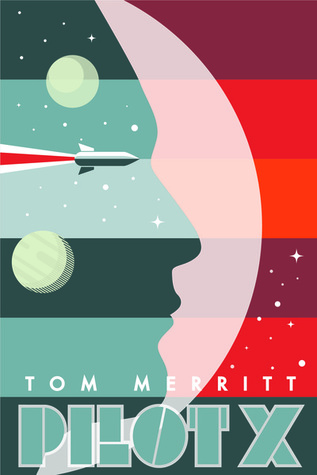
"Pilot X" by Tom Merritt, 2017

"Pilot X" by Tom Merritt, 2017

Time travel is a tricky genre. It’s an equally tricky concept in general. While we’re all familiar with the idea of time travel, it can be difficult to wrap your head around it sometimes – especially when it’s integral to a particular story. Sometimes time travel is merely a frame through which to tell a story and the creator is perfectly happy just letting it happen without much explanation. Others develop convoluted rules to keep themselves and the story in check. Pilot X is something of the latter.

It’s a story that would not exist without time travel. But instead of focusing on just the time travel itself, author Tom Merritt creates a universe where time travel is simply a part of life. The titular character, Pilot X (who later takes on other titles besides just Pilot), is a member of a race that has mastered time. The Alendans can move freely across both time and space in specially engineered ships and Merritt creates a whole universe where this is seen as normal.

There is some really serious political/societal upheaval going on throughout this book and poor Pilot X finds himself wrapped up in all of it – like it or not. And, to be fair, he does at first. When he starts to realize that people from the future are regarding him with more credit than he’s due at a particular time, he gets excited. We all do. We want to know what comes next.

But what comes next isn’t all that simple. Nor is it always that easy to follow. Pilot X gets wrapped up in all kinds of crazy, secretive things going on behind the curtains. He makes discoveries about his own people and is forced to make difficult decisions that change the face of the universe and time as it’s known forever. The journey there is filled with training, diplomatic missions, betrayal, and more. And while it’s an entertaining ride it’s also a challenging one.

It doesn’t help that besides Pilot X and his ship, Verity, it’s hard to really connect with or care about the characters. Still, Pilot X has a very unique voice and perspective. He’s grown up in a world so unlike our own and while he’s seems mostly familiar, at times it’s very obvious how different his perspective on this can be. Pilot X is what made this book so memorable for me. His journey – from ambitious pilot until the end when he’s a man faced with some very difficult, universe-shattering choices – is engaging regardless of how complex and complicated it might be at a certain point.

Fans of time travel and science fiction who don’t mind a few complex twists are going to really enjoy this book. Casual readers might struggle with it a bit and the less interesting parts may cause them to run out early. But for those who stick it out, Pilot X is an entertaining, at times thought provoking read!

My rating: ★★★☆☆ (3 out of 5 stars) - I liked it.

Thursday, February 8, 2018

"White Bodies" by Jane Robbins, 2017

"White Bodies" by Jane Robbins, 2017

Even though the book has some of the elements that have put me off this genre – present tense, the prologue, etc. I somewhat enjoyed it because of the quality of the writing and characterization. It’s not an angst-filled tale of woe despite the subject matter – in fact, there’s a reasonable amount of humor in it and even a nice, rather under-stated little romance in the background. In that sense, though the storyline is very contemporary, it feels more like an old-style psychological thriller than the modern misery-fest domestic thriller.

In White Bodies, we meet twins Callie and Tilda Farrow. It is clear from the start that they are nothing alike – Callie being more introverted and Tilda craving the spotlight. Behind closed doors, Callie has an obsession with her sister and her sister’s life; constantly doing weird things to get her fill of Tilda – literally – and documenting it all in a journal she has kept since she was young. Through the story, we learn a lot about their odd relationship and the history behind it.

Then Callie meets Tilda’s new boyfriend, Felix, and things turn dark. Callie suspects that Felix is manipulative and harmful to her sister and wants her to leave him, though Tilda claims there is nothing wrong with the way she is being treated. Callie joins an online forum about controlling men and forms friendships with others in the group who are able to give her advice and reassurance. When Felix is found dead, Callie thinks something is suspicious and it turns out nothing is as it seems. 

My rating ★★☆☆☆ (2 out of 5 stars) - It was ok.

Wednesday, January 31, 2018

"Star Trek: Discovery: Desperate Hours" by David Mack, 2017

"Star Trek: Discovery: Desperate Hours" by David Mack, 2017

Writing the very first Star Trek Discovery tie-in novel was bestowed upon David Mack, and, in my opinion, he did not disappoint.

 "Star Trek: Discovery: Desperate Hours" takes place one year before the "Star Trek: Discovery" pilot episode and one year after the U.S.S. Enterprise visited Talos IV. We know that the characters and ships we see in the pilot are going to make it through the ordeal in this book. But, for me, that doesn’t detract from the tension or suspense whatsoever – there is excellent pacing and even better character development. And that’s what this novel needed to be: A way for us to get to know these new characters and their relationships on a deeper level, and Mack accomplishes this goal by teaming them with the characters that we already know-- Captain Pike and Spock of the U.S.S. Enterprise.

The story begins with Captain Phillipa Georgiou offering a conditional promotion to Lieutenant Michael Burnham as first officer. This places Burnham in conflict with Kelpien science officer Lieutenant Saru, who was the more seasoned officer and only receives a promotion to second officer. Georgiou, Burnham, and Saru must take the Shenzhou to Sirsa III where a mysterious craft, dubbed the Juggernaut, is attacking the colonists. When it becomes clear that the Juggernaut may pose a threat to the Federation should it leave the planet, Starfleet sends Captain Christopher Pike and the Enterprise to destroy it, with the colony as collateral damage. The story focuses on the conflict between the two ships and their crew, with both trying to do what they think is best for the galaxy.


I was pleased at the amount of insight the novel gives into the characters of Captain Georgiou, Michael Burnham, and Lieutenant Saru, but also by the excellent treatment of some old Trek favorites. Through the story and along the way, Mack includes interesting character studies through combined boarding parties, such as Una from the Enterprise and Saru, but particularly through Burnham and Spock. After the death of her parents, Spock's father Sarek raised Burnham on Vulcan, where she attended the Vulcan Science Academy. In this way, she is like a distorted reflection of Spock, who was estranged from his father while struggling to balance his human and Vulcan ancestry, eventually leaving Vulcan to attend Starfleet Academy. Their interaction drives the story and, as this focuses on a younger Spock, Mack has the ability to present a character still developing into the more familiar iteration of the character.  

It’s a good sci-fi book in general, and an almost-outstanding Trek novel in particular. Fans and newcomers alike will enjoy the Burnham-Spock part of the narrative.Well worth the purchase for any fan of the franchise.

Book description from cover:

Aboard the Starship Shenzhou, Lieutenant Michael Burnham, a human woman raised and educated among Vulcans, is promoted to acting first officer. But if she wants to keep the job, she must prove to Captain Philippa Georgiou that she deserves to have it.

She gets her chance when the Shenzhou must protect a Federation colony that is under attack by an ancient alien vessel that has surfaced from the deepest fathoms of the planet’s dark, uncharted sea.

As the menace from this mysterious vessel grows stronger, Starfleet declares the colony expendable in the name of halting the threat. To save thousands of innocent lives, Burnham must infiltrate the alien ship. But to do so, she needs to face the truth of her troubled past, and seek the aid of a man she has tried to avoid her entire life—until now.

My rating: ★★★☆☆ (3 out of 5 stars) - I liked it.


Tuesday, December 5, 2017

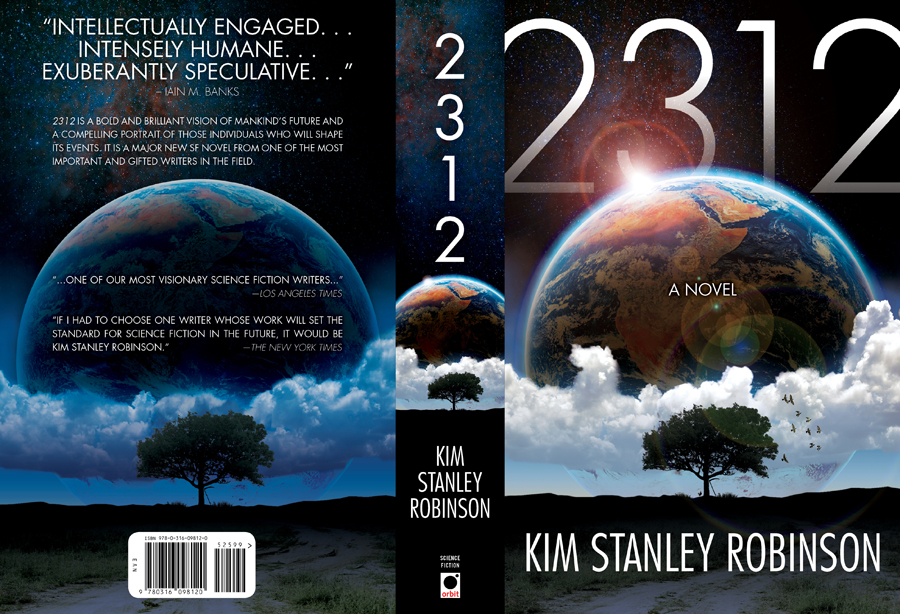
"2312", by Kim Stanley Robinson, 2012

"2312", by  Kim Stanley Robinson, 2012


In the 24th century, mankind has spread throughout the Solar System, from Mercury (where a moving domed city, Terminator, moves on a track to stay out of direct sunlight) to Saturn (where mankind lives on Titan and other moons) to Earth (which is in somewhat dire shape after centuries of climate change and over-population) to Venus (which is undergoing radical terraforming) to Mars (already terraformed). Throughout the system, thousands of asteroids have been hollowed out, spun up, and used to create mini-ecosystems called terraria, some of which contain ecosystems and species no longer found on Earth, and many of which are put in eccentric Solar orbits that allow their use as a mass-transit system, in conjunction with space elevators on the Earth and other major planets. Small quantum computers, called qubes, have been used to create rudimentary artificial intelligences. Humans have extended life spans of more than two centuries (as in some earlier Robinson novels), and there are new genders beyond male and female. These are just some of the marvels among which sets his story.

The novel's complex, convoluted narrative also supports a diverse cast of interesting characters, whose complicated natures are somewhat slowly revealed. Swan in particular, early in the novel, has the feel of a self-absorbed, impetuous twenty-something, but is slowly revealed to be more than a century old, and a well-known former terrarium ecosystem designer. She becomes more likeable and sympathetic as the novel progresses and her character is more fully revealed. She and Fitz are in many ways opposites in their personalities, but their growing friendship is believable due to the more important similarity of their being both smart and empathic. It is indeed this combination that I think makes so many of Robinson's characters distinctively different from most other SF protagonists -- their deep-rooted empathy not just for their friends, but for all of humanity, and indeed for all life, and even natural landscapes.

Summary (with spoilers):


Swan lives on Terminator, a city on Mercury that glides along planet-wide tracks to avoid being caught in the sun. As Swan grieves at the death of her grandmother, Alex, she learns that Alex was involved in secret political dealings. Alex has left several letters that Swan must deliver, causing Swan to meet up with Wahram, Inspector Gennette, and Wang.

In addition to being overcome with grief, Swan is a rather unusual person. She had her qube, Pauline, installed in her head. She's also undergone various physical modifications.

Swan tries to figure out what Alex was working on, but no one will tell her directly what's going on, except that it has to do with Earth, and that they don't trust the qubes. Swan travels to Earth via terraria (hollowed-out asteroids turned into small worlds), to meet up with her former lover, Zasha. On Earth, some ruffians attempt to kidnap her, but she is saved by Kiran. In return, she gets him off-planet to Venus, where he becomes a double agent for two major political powers.

Swan meets up with Wahram on Mercury. After attending a conference, they decide to don some spacesuits and walk back to the city platform. En route, they witness an explosion the almost hits Terminator and destroys the tracks. They rush back to the city, but it's already been evacuated. Since the sun is rising, they need to get to safety. They decide to run sun-ward to the next platform, which has an underground system mirroring the tracks above ground. They make it to the platform, and while they are waiting for the elevator to arrive, Swan jumps in front of Wahram to protect him from a solar flare.

They hike along the underground tunnel for weeks, trying to reach safety, whistling Bach to pass the time. Swan gets increasingly ill from radiation poisoning. Eventually, they go to the surface to break the monotony, even though they are sun-side, and a vehicle passing by rescues them.

Swan spends time with Inspector Gennette, who thinks the attack on Mercury was caused by lots of small rocks thrown so that they would all land at the same time. He's also suspicious of the qubes. Swan and Wahram go to Earth to help with various development projects and then decide to repopulate Earth with all of the animals stored in the terraria. Thousands of animals are sent through the sky in gel balloons. On Earth, Swan and Warham realize they have feelings for each other.

Swan and Warham become passengers on a space craft, when Pauline informs Swan that a similar attack is planned on the Venus sun shield. They use the space ship to deflect the small projectiles, which means that everyone has to evacuate. Swan and Warham get into space suits and float in space, waiting to be rescued. However, their rescue ship is attacked before it can pick them up, and Warham's leg is injured. Eventually, they are rescued, but their time waiting in space is reminiscent of their time in the tunnel.


Meanwhile, these strange humanoid qubes have been wandering about causing trouble, so Inspector Gennette exiles them all in a star ship. The book ends with the marriage of Swan and Warham.

★★★★☆ (4 out of 5 stars) - I really liked it.

Thursday, November 2, 2017

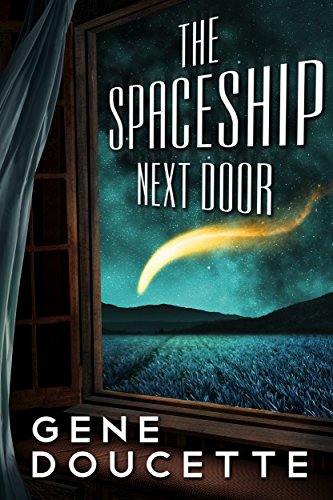
“The Spaceship Next Door” by Gene Doucette, 2015

“The Spaceship Next Door” by Gene Doucette,  2015

The premise itself is interesting enough: a spaceship lands in the town of Sorrow Falls,
Massachusetts, and proceeds to do absolutely nothing for three years. There are no dramatic “first contact” scenes, no enigmatic aliens, no interplanetary romance – just your typical alien spaceship, hanging out in the middle of a field, minding its own business and keeping people from getting too close with its alien forcefield.

Eventually, the government sends a bright (though not very experienced) young man to investigate his pet hypothesis. He meets a quirky, precocious 16-year-old girl who knows everyone and everything in her town, and together they join forces to figure out what’s what and save the world while they’re at it. Along the way, they bump into enigmatic locals, bored soldiers (who spent the last three years waiting for an alien invasion that never came) and a wacky assortment of UFO groupies that created a trailer park community next to the flying saucer.

The book is dim, semi-well written and has no laugh-out-loud moments. The characters are flatly developed and just used as cardboard cutouts whose only purpose is to move the plot along.

That said, “The Spaceship Next Door” falls short in its action scenes. Some of them are explained in overly elaborate details: a certain scene involving a car and a ravine is stretched out over an entire page, even though the action is only 10 seconds long, if that. The pacing is somewhat uneven throughout the book. The first half of the book is slow – almost too slow. The second half is much more fast-paced, and the two don’t mix too well. The end result is anti-climactic.

Overall, “The Spaceship Next Door” is not a decent sci-fi book that does not work equally well as a detective mystery (some of the plot twists were predictable), a comedy, a sci-fi novel and even a young adult book. It’s not close to acceptable, but it’s a nice trial experiment and a failed attempt at a  reversal of the all-too-typical “first contact” trope that's common in science fiction.

My rating: ★☆☆☆☆ (1 out of 5 stars) - I did not like it.