"Calculating God" Robert J. Sawyer, 2000
Fast-paced, morally and intellectually entertaining SF story.
An alien named Hollus has come to Earth to study the five great extinction events that have hit our
planet over the eons. It lands at the Royal Ontario Museum and consults with a paleontologist name Tom Jericjo.
Much of the novel is relatively cerebral, as Jericho and Hollus argue over the scientific data they've gathered in support of God's existence, but the author excels at developing both protagonists into full-fledged characters, and he adds tension to his story in several ways: Jericho has terminal cancer, which gives him a personal stake in discovering the truth of the alien's claims, and lurking in the background are a murderous pair of abortion clinic bombers who have decided that the museum's Burgess Shale exhibition is an abomination that must be destroyed. Finally, there's the spectacular, if not entirely prepared for, climax in which God manifests in an unexpected manner.
This is unusually thoughtful SF.
My Rating: ★★★★☆ (4.5 out of 5 stars) - I really really liked it.
Showing posts with label Canadian. Show all posts
Wednesday, May 11, 2016
Monday, February 16, 2015
Humans (Neanderthal Parallax, #2) by Robert J. Sawyer, 2003
Similar to its preceding book, Humans is a technically smooth novel with a pleasing style. Unlike its preceding book, Hominids, this installment mixes it up a bit. The running plot is framed by Ponter's session with a personality sculpture (what we would call a shrink in our universe)
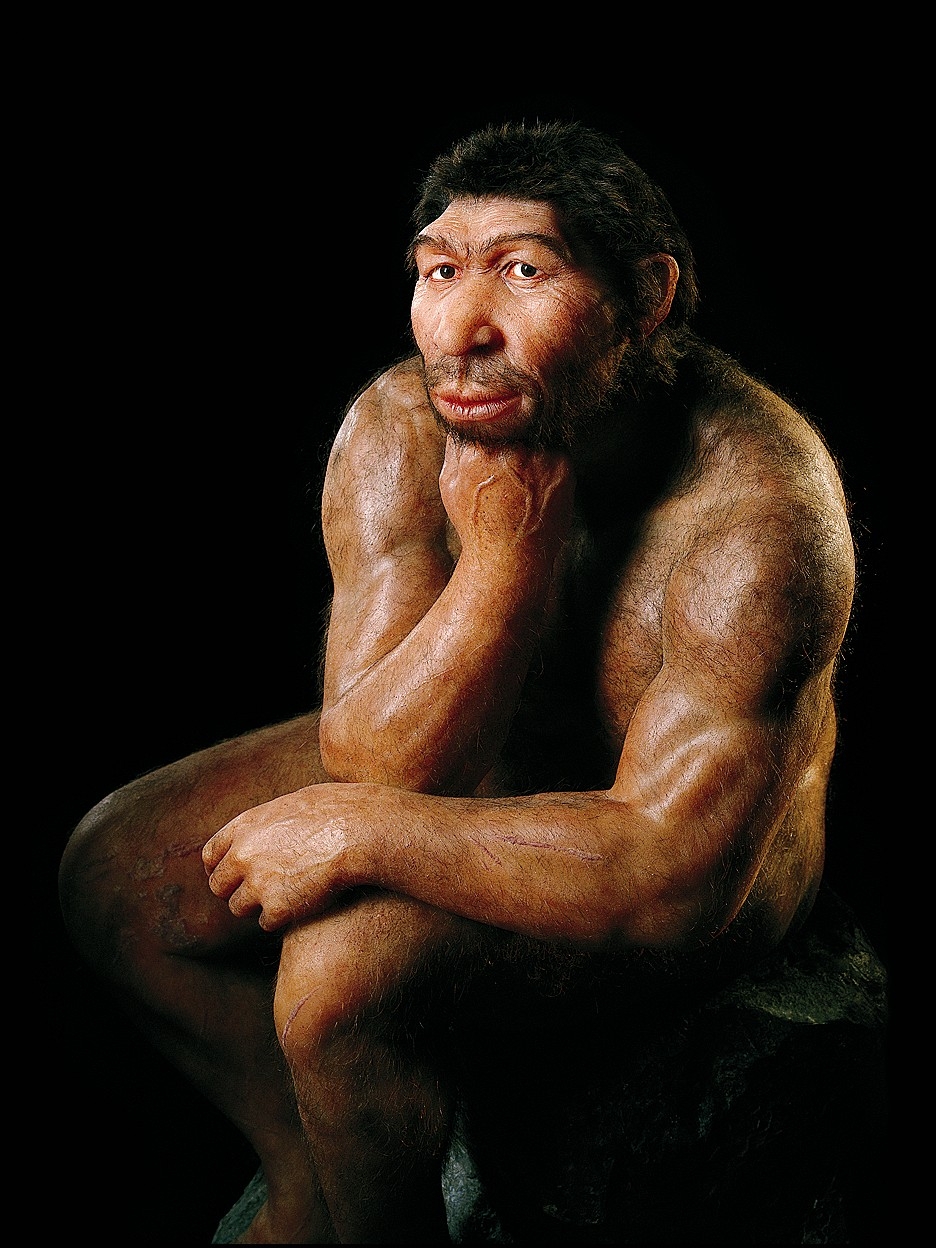
At first the story focuses primarily on Ponter Bonditt and Tukana Pratt, who are Neanderthals from Earth from a parallel universe visiting Earth from the universe we know. With the portal between the Neanderthal world and ours is permanently reopened, Tukana works to build trade and information exchange between our two societies.
Running midway through the story, about a hundred pages in, the pacing changes and focus shifts to Ponter Bonditt and Mary Vaughn. Accompanied by Ponter, Mary travels to the Neanderthal universe and navigates the cultural and ideological differences between the peoples of the two universes.
things I especially liked:
- The various technologies from the parallel world; alibi archive, companion implant, transportation cube, and personal shield.
- The Neanderthals lack of sexual discrimination.
- The world-building of the Neanderthal universe; identical to Earth yet different.
- The concept, explanation, and examples of man-mate and woman-mate.
- The idea of sterilization as the form of punishment for serious crimes, not just for the aggressor, but any family member who share more than fifty percent of their genes with the aggressor.
- Tukana the Neanderthal ambassador to Earth.
things I didn't mind:
- The religion aspect. Not that it was preachy or uninteresting.
- The personality sculpture was, at first, intrusive. Eventually, as we move past the second half of the book, he was less interruptive.
- Rape as drama.
- The Vietnam Memorial scene.
things I could have done without:
- The length at which religion was discussed and debated, particularly midway through the story.
things I didn't expect or made me shake my head:
- Although I expected the (male-to-female) rape was to be covered, the (male-to-male) rape caught me with, umm, with my pants down.
- All the steamy sex about halfway through the story. For a bit there, I thought I was reading a Harlequin romance novel. The scene was quite descriptive.
My rating: ★★★★☆ (4 out of 5 stars)
Similar to its preceding book, Humans is a technically smooth novel with a pleasing style. Unlike its preceding book, Hominids, this installment mixes it up a bit. The running plot is framed by Ponter's session with a personality sculpture (what we would call a shrink in our universe)
At first the story focuses primarily on Ponter Bonditt and Tukana Pratt, who are Neanderthals from Earth from a parallel universe visiting Earth from the universe we know. With the portal between the Neanderthal world and ours is permanently reopened, Tukana works to build trade and information exchange between our two societies.
Running midway through the story, about a hundred pages in, the pacing changes and focus shifts to Ponter Bonditt and Mary Vaughn. Accompanied by Ponter, Mary travels to the Neanderthal universe and navigates the cultural and ideological differences between the peoples of the two universes.
things I especially liked:
- The various technologies from the parallel world; alibi archive, companion implant, transportation cube, and personal shield.
- The Neanderthals lack of sexual discrimination.
- The world-building of the Neanderthal universe; identical to Earth yet different.
- The concept, explanation, and examples of man-mate and woman-mate.
- The idea of sterilization as the form of punishment for serious crimes, not just for the aggressor, but any family member who share more than fifty percent of their genes with the aggressor.
- Tukana the Neanderthal ambassador to Earth.
things I didn't mind:
- The religion aspect. Not that it was preachy or uninteresting.
- The personality sculpture was, at first, intrusive. Eventually, as we move past the second half of the book, he was less interruptive.
- Rape as drama.
- The Vietnam Memorial scene.
things I could have done without:
- The length at which religion was discussed and debated, particularly midway through the story.
things I didn't expect or made me shake my head:
- Although I expected the (male-to-female) rape was to be covered, the (male-to-male) rape caught me with, umm, with my pants down.
- All the steamy sex about halfway through the story. For a bit there, I thought I was reading a Harlequin romance novel. The scene was quite descriptive.
My rating: ★★★★☆ (4 out of 5 stars)
Subscribe to:
Comments (Atom)