The Lottery, by Shirley Jackson, 1948
This a lottery you don't want to win.
The story describes a fictional small town which observes an annual ritual known as "the lottery", which results in the killing of one individual in the town.
"The Lottery" has been described as "one of the most famous short stories in the history of American literature"
My rating: ★★★☆☆ (3 out of 5 stars) - I liked it.
You can read the short story here:
http://fullreads.com/literature/the-lottery/
Wednesday, June 27, 2018
Tuesday, June 19, 2018
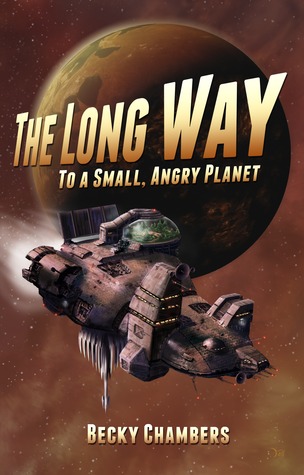
The Long Way to a Small, Angry Planet (Wayfarers #1), by Becky Chambers, 2014
The Long Way to a Small, Angry Planet is a story set in the far future. Rosemary Harper is running from her past, so she joins the crew of the Wayfarer, a ship that tunnels wormholes across the galaxy with its diverse crew of aliens. The crew is offered the chance of a lifetime: a new race is joining the Galactic Commons and the wormhole that needs to be tunneled will make them very wealthy, even if the job takes longer than usual. En route to the planet, the crew encounters a series of mishaps and hazards that bring them closer together. But the denizens of the planet might not be as keen to join the Commons as they initially seemed...
If plot's your thing, this may not be the book for you. This book is all about the journey and very much not about the destination. The book is more a series of vignettes focusing on each character, loosely threaded together by the fact that all the vignettes occur while en route to this planet to tunnel a wormhole.
In fact, the character diversity in this book is stunning. It's a frequent, if disappointing, trope in science fiction that alien races are simply re-skinned humans. They're not actually alien. But Chambers handles her alien races with a deft hand. Each race is distinctly different, with its own culture, language and variant physiology. We get everything from a feathered reptilian species to a species with two sets of vocal chords that changes gender mid-life to a sloth-like species with a willingly contracted virus that shortens their lifespans but grants them enhanced perception and mathematical abilities. And I've only scratched the surface here. The meticulous attention to species creation would set this book apart on its own.
Yet on top of that, Chambers juggles a large cast of main characters, managing to draw a compelling, three-dimensional picture of each one. As I said above, the story is told in vignettes, with each vignette focusing in on a particular character. None of them are skipped, and each one gets a chance to shine (even the curmudgeonly algaeist). Rosemary is technically our main character, but she really only feels that way in the early portions of the book as introductions are made; afterward, it's one of the best ensemble casts I've ever seen.
The worldbuilding too is well-executed. Chambers' future has weight and history, but also a fleshed-out set of cultures that permeate everything the characters do. It would've been easy to go thin on the worldbuilding since most of the book takes place on a ship, but instead the world enhances the emotional journeys of the characters.
In the end, the pacing is rather uneven as a result of the vignette style. But I'd still recommend this book as a shining example of character work and for its core message that family doesn't have to be who we're born with - we can choose our family too.
My rating: ★★★☆☆ (3 out of 5 stars) - I liked it.
"Replay", Ken Grimwood, 1986
The book’s plot is reasonably simple, if fantastic — a 43 year old man dies in the first chapter of a heart attack after a lackluster life. But then he wakes up and he’s age 18 again, just starting college with everything identical to how it had been during his first life. More important, he remembers everything about his life from age 18 to 43 (anyone interested in buying some Apple stock this time around?).
He uses that prior knowledge of his own life as well as his knowledge of history to live his life differently the second time around. But when he gets to be the same age as before, he dies again. He wakes up again … rinse and repeat with a different life strategy each time. But there is one complication he doesn’t notice at first — each time he wakes up after a death, it is a later point in his life. So each life is shorter than the one before. What is going to happen when his replay-date finally catches up to his death-date?
I not only enjoyed the writing style but also the author’s imagination. How many things would you change if you had the opportunity to live your life again? We make decisions, we begin or end or avoid relationships, we commit (or not) to various activities and people, we decide how important money, family and friends are to us. But in the end, the only important resource we really have in our life is time, and the only meaningful decisions we make are how to spend that time in the best way to have a life that is rewarding in our own value system.
Unfortunately Ken Grimwood died at only 59 of (ironically) a heart attack as he was writing the sequel to Replay.
My rating: ★★★★☆ (4 out of 5 stars) - I really liked it.
_________________________________________
https://en.wikipedia.org/wiki/Replay_(Grimwood_novel)
Characters and story[edit]
Replay is the account of 43-year-old radio journalist Jeff Winston, who dies of a heart attack in 1988 and awakens back in 1963 in his 18-year-old body as a student at Atlanta's Emory University. He then begins to relive his life with intact memories of the next 25 years, until, despite his best efforts at cardiac health, he dies of a heart attack, again, in 1988. He immediately returns to 1963, but several hours later than the last "replay". This happens repeatedly with different events in each cycle, each time beginning from increasingly later dates (first days, then weeks, then years, then ultimately decades). Jeff soon realizes that he cannot prevent his death in 1988, but he can change the events that occur before it, both for him, and for others.
During one subsequent replay, Jeff takes notice of a highly acclaimed film, Starsea, that has become a huge success at the box office in 1974. The film is written and produced by an unknown filmmaker, Pamela Phillips, who has recruited Steven Spielberg to direct and George Lucas, as a special effects supervisor, before the two shot to stardom with their own projects. Because the film did not exist in previous replays, Jeff suspects that Pamela is also experiencing the same phenomenon. He locates her and asks her questions about future films which only a fellow replayer would know, confirming his suspicions.
Pamela and Jeff eventually fall in love and become convinced that they are soulmates. Complications arise when they notice that their replays are getting shorter and shorter, with Pamela not beginning her next replay until well after Jeff. Eventually, the two decide to try to find other replayers by placing cryptic messages in newspapers. The messages, which seem very vague to anyone who is not a replayer, generate a fair amount of dead-end responses until the pair receives a letter from a man who is clearly knowledgeable about future events. Jeff and Pamela decide to visit the stranger, only to discover that he is confined to a psychiatric hospital. Surprisingly, the staff does not pay attention to his discussion on the future, but it soon becomes clear why the man is institutionalized when he calmly states that he thinks aliens are forcing him to murder people for their own entertainment.
In a later replay, the two decide to take their experiences public, giving press conferences announcing future events in explicit detail. The government eventually takes notice and forces Pamela and Jeff to provide continued updates on foreign activities. Although the government denies responsibility, major political events begin to transpire differently, and Jeff attempts to break off the relationship. The government refuses, and the pair are imprisoned and forced to continue providing information.
As future replays become shorter and shorter, the two are left to wonder how things will eventually unfold—whether or not the replays will ultimately end, and the pair will pass into the afterlife—or if the current replay is, in fact, the last. Eventually, the replays become so short, Jeff and Pamela relive their original deaths repeatedly in succession—until Jeff finally has a heart attack which he manages to survive. While he calls Pamela soon afterward, she lets him know that she has also survived, and that their replaying wasn't a dream. While it seems ambiguous whether or not they will meet again, Jeff eagerly awaits entering an unpredictable future with endless possibilities.
Awards and nominations[edit]
Replay won the 1988 World Fantasy Award[2] and was on the shortlist for the 1988 Arthur C. Clarke Award.
The novel has been included in several lists of recommended reading: Modern Fantasy: The Hundred Best Novels (1988), Locus Reader's Poll: Best Science Fiction Novel (1988), Aurel Guillemette's The Best in Science Fiction (1993) and David Pringle's Ultimate Guide to Science Fiction (1995).
Sequel and possible film adaptations[edit]
Ken Grimwood was working on a sequel to Replay when he died from a heart attack in 2003 at the age of 59.[3] In 2010 Warner Bros. reported that it was planning on a film version starring Ben Affleck. The screenplay for this adaptation has been written by Jason Smilovic.[4] In 2011 Robert Zemeckis was in talks to direct,[5] but as of 2017 no movement seems to have been made on the project.
Monday, June 4, 2018
"Patternmaster (Patternmaster #4)", Octavia Butler, 1976
Patternmaster introduces us to a future in which humanity, through selective breeding, has produced a race of telepaths. (The origins of this future are detailed in the grim and compelling Mind of My Mind.) Far from creating a blissful paradise on Earth, this has led to a tense society in which the most powerful telepaths control those less powerful, as well as non-telepathic humans they call "mutes," through a link called the Pattern. Humanity, by evolving this direction, has reverted to many purely animal instincts. Patternist leaders, called Housemasters, usually have no choice but to kill outright anyone of comparable ability that might challenge their authority. Though strict laws are in place forbidding wanton abuse of power, especially towards mutes, these are commonly flouted. Nations and governments as we know them no longer exist. The law of the jungle has returned full force.
Underscoring the metaphorical link to animal instincts is Butler's use of the Clayarks, grossly mutated (they look like sphinxes) posthumans of no telepathic ability, the descendants of an aborted attempt by mutes to flee Earth in a starship. Now the Clayarks wander the landscape in loose tribal groups, sometimes alone, preying upon Patternists, who in turn live in terror of infection by the "Clayark disease," the genetic anomaly that mutated Clayarks in the first place.
The plot concerns a young Patternist named Teray, one of the many sons of Rayal, the current Patternmaster. Teray finds himself under the rule of Coransee, a powerful Housemaster who appears to be first in line to succeed the ailing Rayal. Coransee fears that Teray has the power to challenge his succession, and demands that Teray allow himself to be controlled, preventing his power from ever growing to dangerous degrees. Coransee even promises Teray his own House. Teray refuses and vows to escape Coransee — which he soon does, in the company of a healer, a woman named Amber — to seek sanctuary with Rayal. But Coransee isn't about to take that lying down.
The premise doesn't bear close logical scrutiny. If Coransee were really concerned about Teray's
power, he could have killed or controlled the young man with little effort right at the novel's opening. Why even ask? (Well, we wouldn't have gotten a book out of it, then.) Butler's characterizations are good. But in the end Patternmaster seems little more than a grim anti-superhero story. The narrative becomes an exercise in waiting for the foregone conclusion, the inevitable duel to the death between Coransee and Teray. This problem even hampered Mind of My Mind, but in that book, Butler had a much better grasp of both her themes and of how to write suspense. Here, her themes get confused. For a while, it looks as though Butler is telling a metaphorical odyssey about the evils of slavery. But all that dissipates when you realize Teray doesn't want to unravel Patternist society and free everyone from mental tyranny. He'd just rather see himself as Patternmaster instead of Coransee. And Teray doesn't hesitate to use his powers to control others when he gets the chance.
Also, there's just lots of killing going on in this book, of the grisliest sort. Ironically I found myself sympathizing the most with the dreaded Clayarks, whom Butler depicts as a mass of mindless animals bent on wiping out Patternists for reasons she never adequately explores. The book loses a lot of depth because Butler never explains the Clayarks' actions. In fact, she makes a big mistake in having Teray encounter and actually speak to one early in the book. There's an entire missed plot opportunity here Butler never follows through, and this one instance of humanizing the Clayarks, far from making them more fearsome, actually allows the reader a bit of empathy. Which doesn't go down well when you see how our supposed heroes deal with the Clayarks later on.
Butler's Patternist novels get much better than this one, and there's nothing surprising about the earliest work of a fine writer not being among their best. Though Patternmaster can probably be overlooked, Octavia Butler is a novelist you shouldn't.
My rating: ★★★☆☆ (3 out of 5 stars) - I liked it.
Patternmaster introduces us to a future in which humanity, through selective breeding, has produced a race of telepaths. (The origins of this future are detailed in the grim and compelling Mind of My Mind.) Far from creating a blissful paradise on Earth, this has led to a tense society in which the most powerful telepaths control those less powerful, as well as non-telepathic humans they call "mutes," through a link called the Pattern. Humanity, by evolving this direction, has reverted to many purely animal instincts. Patternist leaders, called Housemasters, usually have no choice but to kill outright anyone of comparable ability that might challenge their authority. Though strict laws are in place forbidding wanton abuse of power, especially towards mutes, these are commonly flouted. Nations and governments as we know them no longer exist. The law of the jungle has returned full force.
Underscoring the metaphorical link to animal instincts is Butler's use of the Clayarks, grossly mutated (they look like sphinxes) posthumans of no telepathic ability, the descendants of an aborted attempt by mutes to flee Earth in a starship. Now the Clayarks wander the landscape in loose tribal groups, sometimes alone, preying upon Patternists, who in turn live in terror of infection by the "Clayark disease," the genetic anomaly that mutated Clayarks in the first place.
The plot concerns a young Patternist named Teray, one of the many sons of Rayal, the current Patternmaster. Teray finds himself under the rule of Coransee, a powerful Housemaster who appears to be first in line to succeed the ailing Rayal. Coransee fears that Teray has the power to challenge his succession, and demands that Teray allow himself to be controlled, preventing his power from ever growing to dangerous degrees. Coransee even promises Teray his own House. Teray refuses and vows to escape Coransee — which he soon does, in the company of a healer, a woman named Amber — to seek sanctuary with Rayal. But Coransee isn't about to take that lying down.
The premise doesn't bear close logical scrutiny. If Coransee were really concerned about Teray's
power, he could have killed or controlled the young man with little effort right at the novel's opening. Why even ask? (Well, we wouldn't have gotten a book out of it, then.) Butler's characterizations are good. But in the end Patternmaster seems little more than a grim anti-superhero story. The narrative becomes an exercise in waiting for the foregone conclusion, the inevitable duel to the death between Coransee and Teray. This problem even hampered Mind of My Mind, but in that book, Butler had a much better grasp of both her themes and of how to write suspense. Here, her themes get confused. For a while, it looks as though Butler is telling a metaphorical odyssey about the evils of slavery. But all that dissipates when you realize Teray doesn't want to unravel Patternist society and free everyone from mental tyranny. He'd just rather see himself as Patternmaster instead of Coransee. And Teray doesn't hesitate to use his powers to control others when he gets the chance.
Also, there's just lots of killing going on in this book, of the grisliest sort. Ironically I found myself sympathizing the most with the dreaded Clayarks, whom Butler depicts as a mass of mindless animals bent on wiping out Patternists for reasons she never adequately explores. The book loses a lot of depth because Butler never explains the Clayarks' actions. In fact, she makes a big mistake in having Teray encounter and actually speak to one early in the book. There's an entire missed plot opportunity here Butler never follows through, and this one instance of humanizing the Clayarks, far from making them more fearsome, actually allows the reader a bit of empathy. Which doesn't go down well when you see how our supposed heroes deal with the Clayarks later on.
Butler's Patternist novels get much better than this one, and there's nothing surprising about the earliest work of a fine writer not being among their best. Though Patternmaster can probably be overlooked, Octavia Butler is a novelist you shouldn't.
My rating: ★★★☆☆ (3 out of 5 stars) - I liked it.
Labels:
amber,
anyanwu,
black writers,
clayark,
coransee,
doro,
healer,
octavia butler,
patternist,
patternmaster,
rayal,
sci-fi,
science fiction,
telepathy,
teray
Wednesday, May 30, 2018
"Clay's Ark (Patternmaster #3)", Octavia Butler, 1984
Clay’s Ark (1984) was written last in Octavia Butler’s 4-book PATTERNIST series, but comes third in chronology. It takes place after Wild Seed (1980) and Mind of My Mind (1977), in the post-apocalyptic California desert. Society has collapsed into armed enclaves, marauding ‘car families’, organ hunters, and isolated towns. It’s along the lines of Mad Max, with fuel sources depleted and social infrastructure nonexistent, violent death lurking at any moment, and little room for anything more than survival.
This world is gradually revealed via two storylines, one set in the past and the other in the present. The past story arc is centered on an astronaut named Eli, the only survivor of a spaceship called Clay’s Ark that went on an exploratory mission to Proxima Centauri. The mission encountered an alien microbe that affected and transformed their DNA for its own purposes. Eli survives the return to Earth, but is infected with this microbe, which imparts on its host increased strength, endurance, healing ability, and appetite.
However, it also enslaves humans by forcing them to spread the disease. Namely, the men feel an overwhelming urge to infect unaffected females and mate with them, and infected women also feel the same compulsion. Infected men also feel intense aggression towards other males, which leads to a lion’s pride type of social structure, with the strongest males taking as many females as possible and fighting off competing males. The most disturbing aspect of this book is that infected people are fully aware of these compulsions and rebel against them, but cannot resist. So they are both slaves and puppets to this alien microbe that drives them to animal-like behavior.
In the current timeline we meet Blake, a physician who still remembers pre-collapse society, and his
twin daughters Rane and Keira. Rane is healthy and confident, while Keira suffers from an incurable form of leukemia. The story wastes no time in throwing them into trouble, as their car is stopped by two men who force them at gunpoint to return with them to a remote enclave in the desert. As the story progresses, we learn that this community is led by former astronaut Eli and consists of people infected by the sinister alien microbe brought back from Proxima Centauri.
The classic Butler themes of domination, enslavement, power, and strange sexual relations are on full display in Clay’s Ark. It’s not an easy reading experience, and I’m sure that’s one reason that Butler’s books are not more widely read, but they are certainly challenging and force the reader outside their comfort zone. We have no choice but to go along with the difficult decisions the characters face in whether to submit to an alien virus that will transform them.
Butler seems fixated on the idea of humans being transformed into something alien, both more and less than human. The process of transformation is always difficult, painful and invasive, and people often don’t survive. Butler seems to revel in throwing readers and her characters into uncomfortable situations. This was also the case in the previous books Wild Seed and Mind of My Mind, though the transformation was psychic in nature. So thematically Clay’s Ark delves into the same territory, but does not feature any of the telepaths from the previous books.
My rating: ★★★★★ (5 out of 5 stars) - I loved it!
Clay’s Ark (1984) was written last in Octavia Butler’s 4-book PATTERNIST series, but comes third in chronology. It takes place after Wild Seed (1980) and Mind of My Mind (1977), in the post-apocalyptic California desert. Society has collapsed into armed enclaves, marauding ‘car families’, organ hunters, and isolated towns. It’s along the lines of Mad Max, with fuel sources depleted and social infrastructure nonexistent, violent death lurking at any moment, and little room for anything more than survival.
This world is gradually revealed via two storylines, one set in the past and the other in the present. The past story arc is centered on an astronaut named Eli, the only survivor of a spaceship called Clay’s Ark that went on an exploratory mission to Proxima Centauri. The mission encountered an alien microbe that affected and transformed their DNA for its own purposes. Eli survives the return to Earth, but is infected with this microbe, which imparts on its host increased strength, endurance, healing ability, and appetite.
However, it also enslaves humans by forcing them to spread the disease. Namely, the men feel an overwhelming urge to infect unaffected females and mate with them, and infected women also feel the same compulsion. Infected men also feel intense aggression towards other males, which leads to a lion’s pride type of social structure, with the strongest males taking as many females as possible and fighting off competing males. The most disturbing aspect of this book is that infected people are fully aware of these compulsions and rebel against them, but cannot resist. So they are both slaves and puppets to this alien microbe that drives them to animal-like behavior.
In the current timeline we meet Blake, a physician who still remembers pre-collapse society, and his
twin daughters Rane and Keira. Rane is healthy and confident, while Keira suffers from an incurable form of leukemia. The story wastes no time in throwing them into trouble, as their car is stopped by two men who force them at gunpoint to return with them to a remote enclave in the desert. As the story progresses, we learn that this community is led by former astronaut Eli and consists of people infected by the sinister alien microbe brought back from Proxima Centauri.
The classic Butler themes of domination, enslavement, power, and strange sexual relations are on full display in Clay’s Ark. It’s not an easy reading experience, and I’m sure that’s one reason that Butler’s books are not more widely read, but they are certainly challenging and force the reader outside their comfort zone. We have no choice but to go along with the difficult decisions the characters face in whether to submit to an alien virus that will transform them.
Butler seems fixated on the idea of humans being transformed into something alien, both more and less than human. The process of transformation is always difficult, painful and invasive, and people often don’t survive. Butler seems to revel in throwing readers and her characters into uncomfortable situations. This was also the case in the previous books Wild Seed and Mind of My Mind, though the transformation was psychic in nature. So thematically Clay’s Ark delves into the same territory, but does not feature any of the telepaths from the previous books.
My rating: ★★★★★ (5 out of 5 stars) - I loved it!
Labels:
anyanwu,
black writers,
blake,
Clayarks,
doro,
eugenics,
immortality,
keira,
octavia butler,
patternist,
patternmaster,
Proxima Centauri,
psionic,
psychic,
rane,
sci-fi,
telepathy
Tuesday, May 29, 2018
"Mind of My Mind (Patternmaster #2)", Octavia Butler, 1977
Mind of My Mind takes place about a century after the events of Wild Seed. Doro, the immortal being from the first book, has continued to cultivate a huge number of active telepaths throughout the U.S. Anyanwu, the centuries-old shape-shifting healer, now goes by Emma and occupies a much smaller role in this book. Instead, the story is centered on a young teenaged girl named Mary. Doro recognizes great potential in her, and though she has a troubled upbringing like many other latent telepaths, he brings her through the difficult transition to active psionic abilities.
At this point Doro and Mary realize that she has a unique ability to link together other telepaths under her control in a Pattern of psychic bonds. The story follows a number of psychics who find themselves drawn to Forsyth, California, not understanding why. When they are gathered under one roof with Mary, it is revealed that Doro wants them to submit to Mary’s control in the hopes of forming a telepathic bond among them. They are extremely resistant to this proposal, and consider trying to kill Mary to avoid this outcome. However, Doro is an ever-present threat, and they are afraid to cross him. However, when they do link their minds, it is Doro who questions whether this outcome is truly the goal of his psychic breeding program over millennia, or whether Mary and the others in her Pattern represent a greater threat to him than anyone before.
What carries the novel over the obvious course of its plotting is Butler's attention to character, as well as her intriguing notion of how those with psychic abilities might function in a world mostly populated by people who haven't got them. Doro, an utterly loathsome bastard from the get-go, is a ruthless, psychopathic tyrant; devoid of empathy, he kills those not useful to him as casually as one might crumple up a paper cup and throw it away. Mary becomes the first of the Pattern to develop anything like a moral compass, but even her most beneficent deeds involve taking over the minds of others, compelling them to follow her will, all the while believing they are choosing their actions. Mary understands the moral quandary, but doesn't choose to avoid it. The result is that even this novel's most sympathetic characters are never 100% likable. But Butler's theme — that the moral precepts all of us live by in order to get along might not even occur to someone who possesses powers nearly godlike to us — is startling and provocative.
My rating: ★★★★★ (5 out of 5 stars) - I loved it!
Mind of My Mind takes place about a century after the events of Wild Seed. Doro, the immortal being from the first book, has continued to cultivate a huge number of active telepaths throughout the U.S. Anyanwu, the centuries-old shape-shifting healer, now goes by Emma and occupies a much smaller role in this book. Instead, the story is centered on a young teenaged girl named Mary. Doro recognizes great potential in her, and though she has a troubled upbringing like many other latent telepaths, he brings her through the difficult transition to active psionic abilities.
At this point Doro and Mary realize that she has a unique ability to link together other telepaths under her control in a Pattern of psychic bonds. The story follows a number of psychics who find themselves drawn to Forsyth, California, not understanding why. When they are gathered under one roof with Mary, it is revealed that Doro wants them to submit to Mary’s control in the hopes of forming a telepathic bond among them. They are extremely resistant to this proposal, and consider trying to kill Mary to avoid this outcome. However, Doro is an ever-present threat, and they are afraid to cross him. However, when they do link their minds, it is Doro who questions whether this outcome is truly the goal of his psychic breeding program over millennia, or whether Mary and the others in her Pattern represent a greater threat to him than anyone before.
What carries the novel over the obvious course of its plotting is Butler's attention to character, as well as her intriguing notion of how those with psychic abilities might function in a world mostly populated by people who haven't got them. Doro, an utterly loathsome bastard from the get-go, is a ruthless, psychopathic tyrant; devoid of empathy, he kills those not useful to him as casually as one might crumple up a paper cup and throw it away. Mary becomes the first of the Pattern to develop anything like a moral compass, but even her most beneficent deeds involve taking over the minds of others, compelling them to follow her will, all the while believing they are choosing their actions. Mary understands the moral quandary, but doesn't choose to avoid it. The result is that even this novel's most sympathetic characters are never 100% likable. But Butler's theme — that the moral precepts all of us live by in order to get along might not even occur to someone who possesses powers nearly godlike to us — is startling and provocative.
My rating: ★★★★★ (5 out of 5 stars) - I loved it!
Friday, May 11, 2018
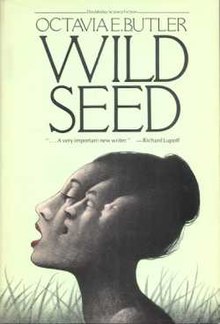
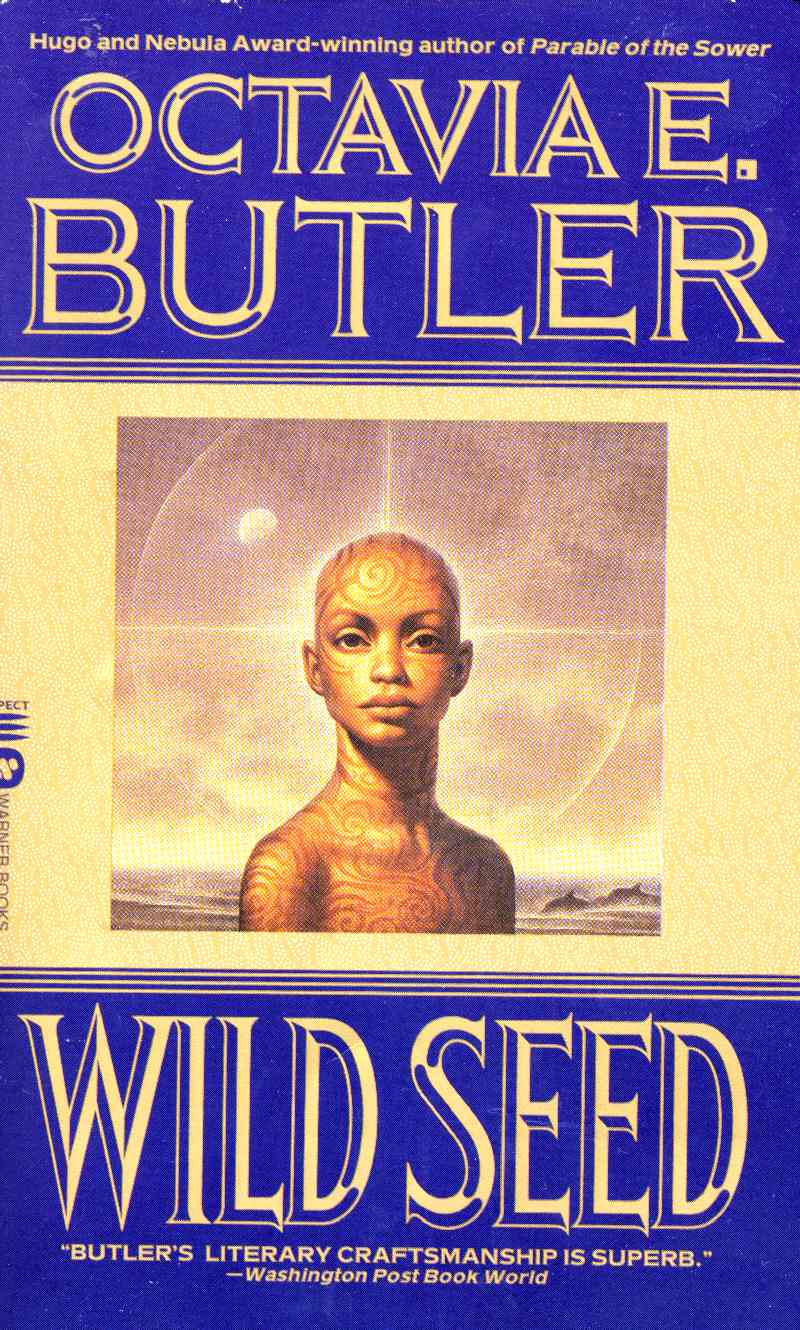
"Wild Seed (Patternmaster #1)", Octavia Butler, 1980
Anyanwu and Doro are two immortal beings. Doro is more of a spirit than a man. He lives through millennial by possessing other’s bodies, killing the original owners in the process. Anyanwu is a shape shifter who can constantly rejuvenate her body so that she stays young forever. Doro kills, Anyanwu heals. They are as opposite as they can be, and yet each is the only immortal the other knows. Wild Seed begins with the two coming into contact for the first time, when Doro happens upon the African village where Anyanwu’s living in the late 1600s and shows the relationship between them up until the late 1800s.
Wild Seed is easy to read, but there’s a lot going on underneath the surface. There’s so many different topics at play here – race, slavery, gender, sexuality. Basically, if it’s a topic relating to power structures, Wild Seed deals with it. It doesn’t deal much with LGBTQ themes, but I’m still listing it under the tag since Anyanwu has a wife at one point (happens between chapters) and could probably be considered bisexual.
Wild Seed deals with the difficulties of being immortal and the inherent loneliness of watching everyone you know die. This is the focal point of the relationship between Anyanwu and Doro. Anyanwu may not be able to condone what Doro does, but he’s the only person who will remain constant as the families she builds for herself die around her.
Doro is dislikable, but I think you’re supposed to hate him. He’s spent his extraordinary long life on a eugenics project, creating a race of people with special powers. He’s controlling and manipulative and thinks nothing of killing others. He wants people to be under his control, to respect and obey him in all things. But Anyanwu cannot respect him, and she does not always obey him. She’s wild seed – a talented person born outside his breeding programs.
Book 1 . Covenant 1690:
Anyanwu lives as a god among her power, an immortal shape-shifter whose control over living material allows her to heal others. Doro too is an immortal with a keen interest in people like Anyanwu. In fact he has been collecting people like her – telekinetics, doomed telepaths, and so on - for millennia. Anyanwu is unique in that she is the only other immortal he has ever encountered; when he stumbles over Anyanwu’s existence Doro is eager to add her to his collection. He is seductive enough that Anyanwu agrees to accompany him through the hellscape of an Africa subject to repeated slaver raids and off to the New World, not the most ideal place for an African at this time.
Alas, Doro is an obligate psychic predator forced to hop from body to body to sustain himself and his interest in people with special gifts is because their minds taste best when consumed. He is no Charles Xavier or even Magneto gathering allies but a nomadic herder engaged in an extremely long duration breeding program and any empathy he might seem to have for his food is almost purely an illusion.
After the penny drops, she sticks around because she has fallen in love with Isaac, one of Doro’s subjects. Isaac convinces Anyanwu to stick around with a telling argument that the author carefully keeps hidden from the reader much as I am doing now.
Book II . Lot’s Children 1741:
Anyanwu doesn’t have a lot of cards in her hand when it comes to bargaining with Doro but she has a few (she can, for example, run away in the form of an animal whose mind Doro cannot perceive) but his powers and willingness to use her loved ones as hostages mean that the balance of power is very much on his side. Her love for Isaac is enough that she puts up with Doro’s use of both of them in his breeding programs, and Doro’s casually murderous customs. Her persistence is paid most poorly.
Book III . Canaan 1840
Anyanwu builds a new life for herself, one with a community of gifted who she nurtures rather than exploits. Doro of course ruins all this by tracking her down and while he tries to convince her they can reach a tolerable accommodation, not only do his misjudgments provoke terrible tragedies but he cannot change his predatory ways or his profound empathetic deficits. In the end, Anyanwu comes to the conclusion there are only two paths: submit to Doro in the knowledge that even when he tries very hard to be less than a total monster for the sake of the only person who shares his immortality he will still be a horrible person, or escape into death. Doro is the only one in a position to argue out of this and of course this is one game where he is the one stuck with terrible cards.
My rating: ★★★★★ (5 out of 5 stars) - I loved it!
Anyanwu and Doro are two immortal beings. Doro is more of a spirit than a man. He lives through millennial by possessing other’s bodies, killing the original owners in the process. Anyanwu is a shape shifter who can constantly rejuvenate her body so that she stays young forever. Doro kills, Anyanwu heals. They are as opposite as they can be, and yet each is the only immortal the other knows. Wild Seed begins with the two coming into contact for the first time, when Doro happens upon the African village where Anyanwu’s living in the late 1600s and shows the relationship between them up until the late 1800s.
Wild Seed is easy to read, but there’s a lot going on underneath the surface. There’s so many different topics at play here – race, slavery, gender, sexuality. Basically, if it’s a topic relating to power structures, Wild Seed deals with it. It doesn’t deal much with LGBTQ themes, but I’m still listing it under the tag since Anyanwu has a wife at one point (happens between chapters) and could probably be considered bisexual.
Wild Seed deals with the difficulties of being immortal and the inherent loneliness of watching everyone you know die. This is the focal point of the relationship between Anyanwu and Doro. Anyanwu may not be able to condone what Doro does, but he’s the only person who will remain constant as the families she builds for herself die around her.
Doro is dislikable, but I think you’re supposed to hate him. He’s spent his extraordinary long life on a eugenics project, creating a race of people with special powers. He’s controlling and manipulative and thinks nothing of killing others. He wants people to be under his control, to respect and obey him in all things. But Anyanwu cannot respect him, and she does not always obey him. She’s wild seed – a talented person born outside his breeding programs.
Book 1 . Covenant 1690:
Anyanwu lives as a god among her power, an immortal shape-shifter whose control over living material allows her to heal others. Doro too is an immortal with a keen interest in people like Anyanwu. In fact he has been collecting people like her – telekinetics, doomed telepaths, and so on - for millennia. Anyanwu is unique in that she is the only other immortal he has ever encountered; when he stumbles over Anyanwu’s existence Doro is eager to add her to his collection. He is seductive enough that Anyanwu agrees to accompany him through the hellscape of an Africa subject to repeated slaver raids and off to the New World, not the most ideal place for an African at this time.
Alas, Doro is an obligate psychic predator forced to hop from body to body to sustain himself and his interest in people with special gifts is because their minds taste best when consumed. He is no Charles Xavier or even Magneto gathering allies but a nomadic herder engaged in an extremely long duration breeding program and any empathy he might seem to have for his food is almost purely an illusion.
After the penny drops, she sticks around because she has fallen in love with Isaac, one of Doro’s subjects. Isaac convinces Anyanwu to stick around with a telling argument that the author carefully keeps hidden from the reader much as I am doing now.
Book II . Lot’s Children 1741:
Anyanwu doesn’t have a lot of cards in her hand when it comes to bargaining with Doro but she has a few (she can, for example, run away in the form of an animal whose mind Doro cannot perceive) but his powers and willingness to use her loved ones as hostages mean that the balance of power is very much on his side. Her love for Isaac is enough that she puts up with Doro’s use of both of them in his breeding programs, and Doro’s casually murderous customs. Her persistence is paid most poorly.
Book III . Canaan 1840
Anyanwu builds a new life for herself, one with a community of gifted who she nurtures rather than exploits. Doro of course ruins all this by tracking her down and while he tries to convince her they can reach a tolerable accommodation, not only do his misjudgments provoke terrible tragedies but he cannot change his predatory ways or his profound empathetic deficits. In the end, Anyanwu comes to the conclusion there are only two paths: submit to Doro in the knowledge that even when he tries very hard to be less than a total monster for the sake of the only person who shares his immortality he will still be a horrible person, or escape into death. Doro is the only one in a position to argue out of this and of course this is one game where he is the one stuck with terrible cards.
My rating: ★★★★★ (5 out of 5 stars) - I loved it!
Subscribe to:
Comments (Atom)